
Two old fats, two different kitchens
Ghee and beef tallow are not modern inventions. Both have been used as primary cooking fats for centuries — ghee in Indian and South Asian households, tallow in European and African ones. Neither is a health trend. Neither requires a nutritionist to explain. They are simply what people cooked with before refined vegetable oils replaced them.
The question is not which one is better. It depends entirely on what you are making, what flavour you want, and what you have on hand. This post covers the differences plainly so you can decide for yourself.
What is ghee?
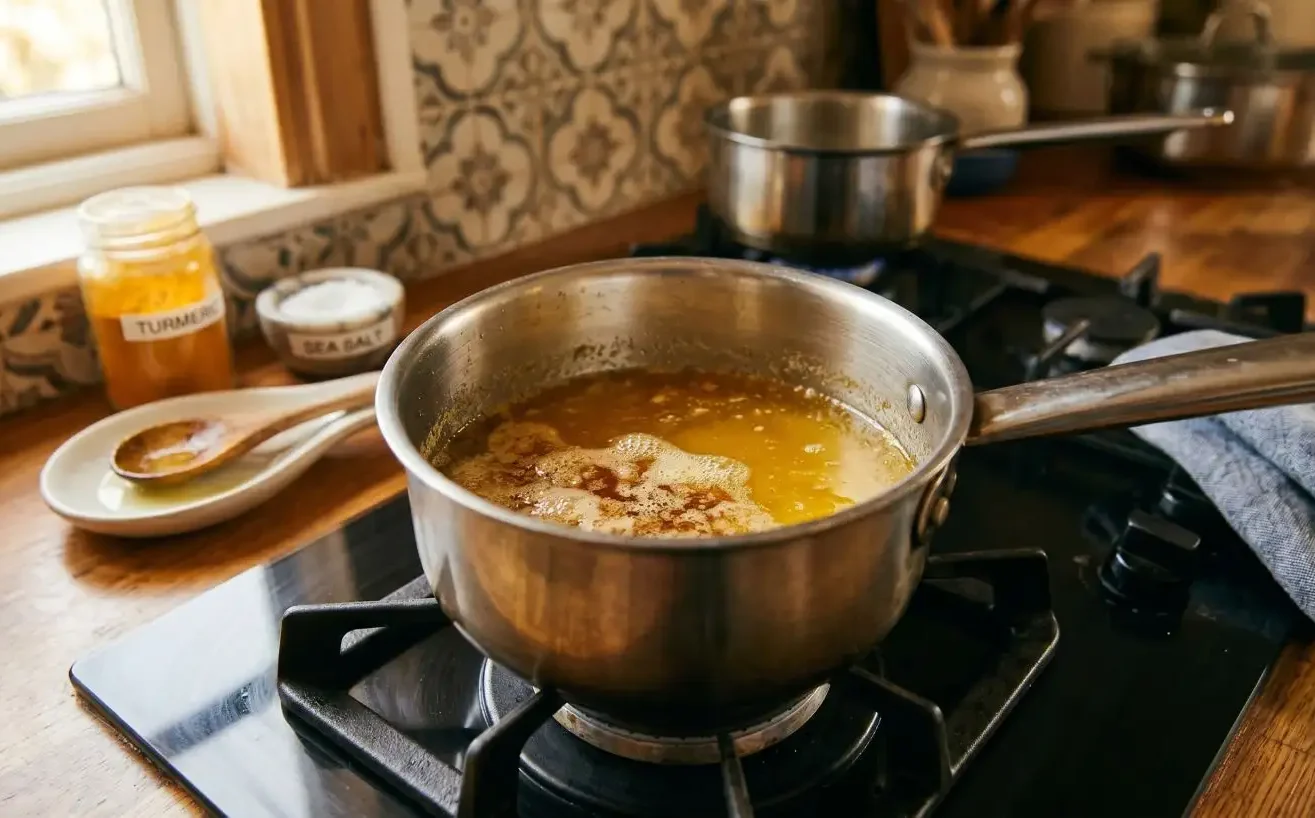
Ghee is clarified butter — butter that has been slowly heated until the water evaporates and the milk solids separate out and are removed, leaving behind pure golden butterfat. What distinguishes ghee from regular clarified butter is that the milk solids are allowed to brown lightly before straining, which gives ghee its characteristic nutty, slightly caramelised flavour. The result is a fat that is almost entirely pure butterfat, with most of the lactose and dairy proteins removed.
Ghee originates in India, where it has been used in cooking, in Ayurvedic medicine, and in religious practice for thousands of years. It remains a staple in Indian, South Asian, and Middle Eastern kitchens today — used for tempering spices, finishing curries and dals, and as a table condiment drizzled over rice or roti.
Ghee can be made from the butter of any dairy animal — cow, buffalo, or goat — though in South Africa cow’s milk ghee is the most widely available. In India, where ghee originates, buffalo milk is the more common everyday choice; the cow is a sacred animal in Hindu tradition, which gives cow’s milk ghee a religious significance beyond its culinary use.
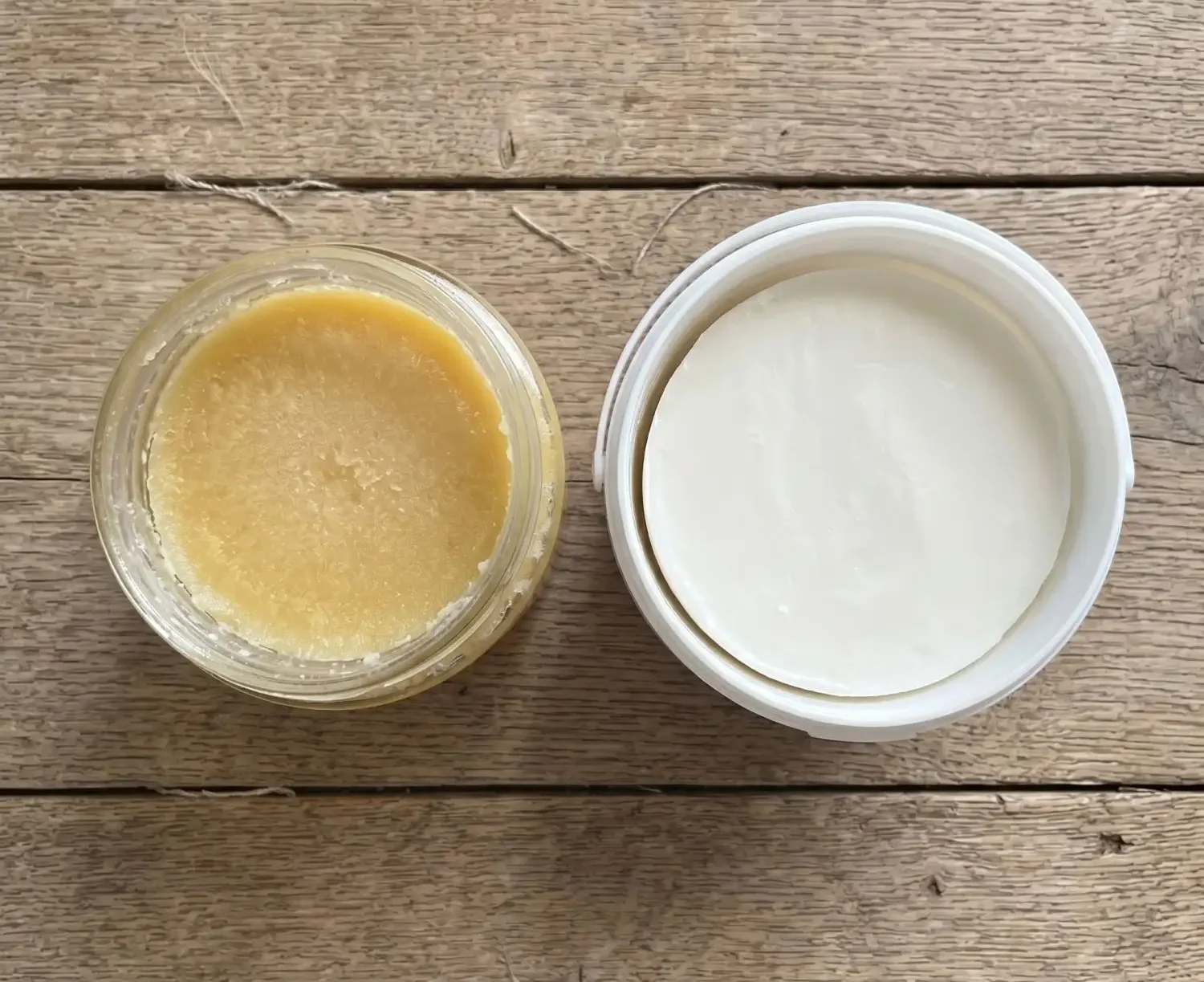
At room temperature, ghee is semi-solid and scoopable, similar to soft butter. It turns liquid when heated. Stored in a sealed jar away from light and heat, it keeps for several months at room temperature and up to a year or longer in the fridge.
What is beef tallow?
Beef tallow is rendered beef fat — typically from the suet found around the kidneys and loins of cattle. The raw fat is melted slowly until it becomes a clear liquid, then strained to remove any remaining solids and impurities. Once cooled, it sets into a firm, white or pale yellow fat that is solid at room temperature and melts cleanly when heated.
Tallow was the everyday cooking fat in South African, European, and American homes before vegetable oils displaced it in the twentieth century. It was used for frying, roasting, basting, and baking — and before that, for making candles and soap. It is not a new discovery. It is simply what was always in the pot before the industry decided otherwise.
How they compare
Smoke point
Both fats handle high heat well. Ghee has a slightly higher smoke point — around 250°C — because the removal of milk solids eliminates the proteins that would otherwise burn. Tallow sits between 200°C and 215°C depending on how it was rendered. In practical terms, both are suited to frying, searing, and roasting at temperatures that would destroy butter or most plant-based oils. The difference between them at high heat is smaller than the difference between either of them and refined vegetable oil.
Flavour
This is where the two fats diverge most clearly. Ghee has a pronounced nutty, buttery flavour that comes from the browning of the milk solids during production. It adds a distinct richness to whatever it touches and is a flavour in itself — particularly suited to dishes where that buttery depth is wanted. Tallow has a mild, clean, savoury character. It enhances the flavour of the food being cooked without competing with it, which makes it the better choice when you want the meat or vegetables to lead. For a South African braai or a simple roast, tallow. For finishing a dal or tempering spices, ghee.
Nutritional profile
Both are predominantly saturated and monounsaturated fat, which is what makes both stable under heat. Ghee is roughly 50% saturated fat and contains butyrate, a short-chain fatty acid that supports gut lining health, along with fat-soluble vitamins A, D, E, and K. Tallow from grass-fed cattle carries a similar vitamin profile plus conjugated linoleic acid, and is entirely dairy-free. Neither fat is a seed oil, and neither degrades rapidly under heat the way polyunsaturated fats do. Beyond that, the nutritional differences between a quality ghee and a quality tallow are modest — both are real, whole fats with a place in a traditional diet.
Shelf life and storage
Both fats are shelf-stable, which sets them apart from butter and most plant oils. Ghee typically lasts 9–12 months opened at room temperature and up to a year or more refrigerated. The removal of moisture and milk solids is what gives it that stability. Tallow is similarly shelf-stable and in some conditions outlasts ghee, particularly if it has been well-rendered with low residual moisture. Both should be stored in sealed containers away from direct heat and light. Neither requires refrigeration under normal conditions, though refrigeration extends both.
Culinary uses
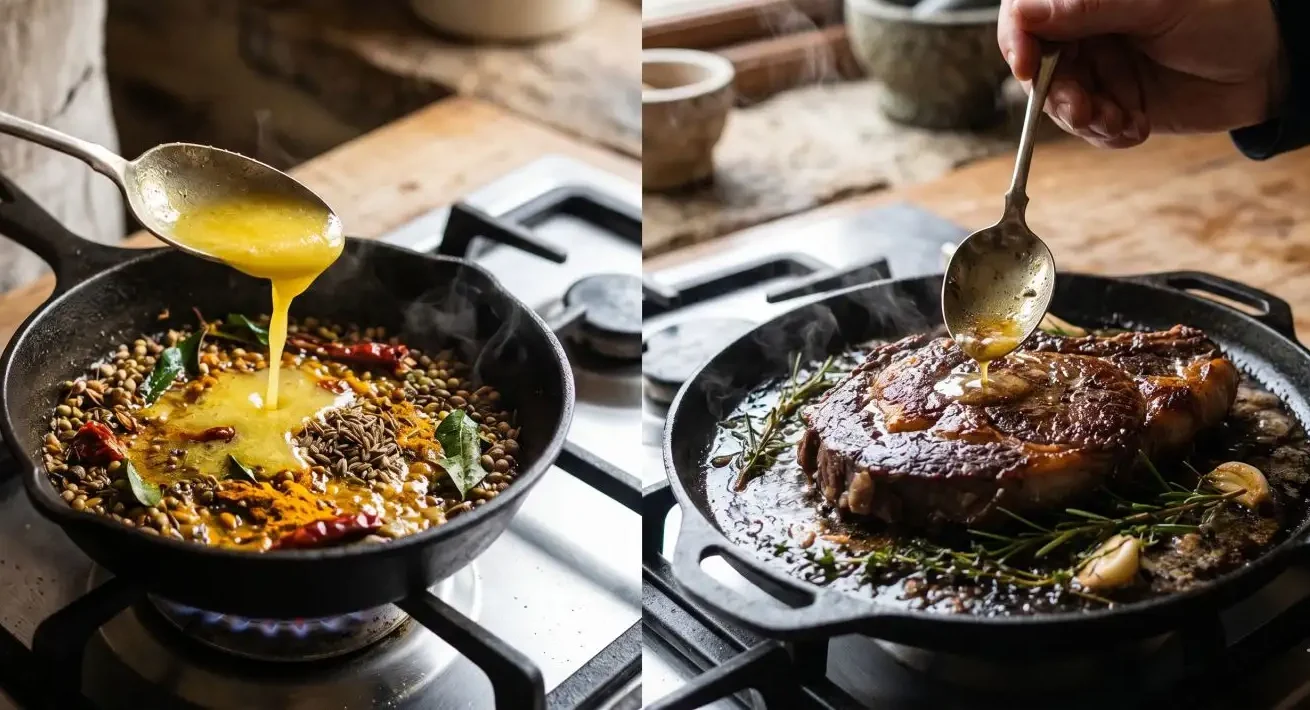
Ghee earns its place in dishes where the fat is part of the flavour — Indian cooking, Middle Eastern preparations, finishing sauces, and anything where a buttery richness is the goal. It also works well in baking where a nutty note suits the recipe. Tallow is the better choice for high-heat savoury cooking where you want a neutral, stable fat: roasting, frying, basting meat, seasoning cast iron, and anything where the cooking fat should disappear into the dish rather than announce itself.
Availability and price in South Africa
Ghee is widely available in South African supermarkets, Indian grocery stores, and health food retailers. Quality varies considerably — look for ghee made from grass-fed butter where possible, and avoid plant-based ghee substitutes made with vegetable oil. Beef tallow is less commonly stocked in mainstream retail but is available through butchers, online, and from specialist producers. In general, tallow is the more affordable option per gram of usable fat, particularly when bought in larger quantities.
Which one to reach for
There is no single answer. Both have earned their place in a well-stocked kitchen.
Reach for ghee when you are cooking something where a nutty, buttery flavour is an asset — Indian dishes, tempering whole spices, finishing a sauce, or baking a savoury pastry where richness matters. Ghee is also a reasonable option for anyone who is lactose intolerant, since the clarification process removes most of the milk proteins and lactose. That said, trace amounts can remain, so anyone with a true dairy allergy should avoid ghee entirely and use tallow instead, which is completely dairy-free.
Reach for tallow when the fat is functional rather than flavour-forward — high-heat frying, roasting vegetables, basting meat at the braai, or cooking something where you want the ingredients to carry the dish.
If you only have one, tallow is the more versatile everyday cooking fat for savoury cooking in a South African kitchen. But the honest answer is that both are worth having on the shelf.
Finding tallow in South Africa
If you are looking to cook with beef tallow, Toeka stocks options from two producers: Affieplaas, from grain-fed cattle, and BEAR Kitchen, from grass-fed cattle. Both are single-ingredient, fully rendered, and suited to everyday cooking at any heat.
The question is not which is better
Ghee and tallow were both in traditional kitchens for good reason. They came from the same part of the world’s oldest cooking traditions, but typically from different animals — and always from different parts of those animals. The question was never which is better. It was always which one suits the dish in front of you.


