

The only guide you need — no jargon, no fuss, just a pan that lasts a lifetime.
If you have a cast iron pan gathering dust in the back of a cupboard, this post is for you. And if you have just bought one and have no idea what to do next, this post is also for you.
Seasoning a cast iron pan sounds complicated. It is not. It is one of the most straightforward things you will ever do in a kitchen — and once it is done properly, you will have a pan that cooks better, cleans easier, and lasts decades without replacement.
All it takes is a little heat, a thin layer of the right fat, and some patience. We are going to use beef tallow — and by the end of this post, you will understand exactly why it is the better choice.
Why Season a Cast Iron Pan at All?
Most people have heard that cast iron needs to be ‘seasoned’ before use. Fewer people actually understand what that means, or why it matters beyond making the pan less sticky. So before we get into the how, it is worth spending a moment on the why.
Cast iron is bare iron. It has no coating, no protective layer, and no non-stick surface when it comes out of the foundry. Left alone, it rusts. Exposed to moisture — even just the humidity in a kitchen — it will oxidise and deteriorate. Seasoning is what changes that.
A properly seasoned pan does three things that a bare pan cannot:
- It becomes non-stick. The seasoning layer fills in the microscopic pores and rough texture of the cast iron, creating a smooth, slick surface that food releases from naturally. This is not like Teflon — it builds up gradually with use and gets better over time rather than wearing out. An old, well-used cast iron pan is often more non-stick than a brand new one.
- It prevents rust. The hardened fat layer seals the iron from air and moisture. Without it, cast iron rusts surprisingly quickly. With it, a pan can last generations without degrading.
- It improves with every use. Every time you cook with fat in a seasoned cast iron pan, you are adding another micro-layer to the surface. Over months and years, the pan gets darker, smoother, and better at doing its job. This is the opposite of what happens with a non-stick pan, which degrades with use. Cast iron does the reverse.
The pan your grandmother cooked in for forty years was not special because it was old. It was special because it had been used — and every meal built the surface a little further.
What Does ‘Seasoning’ Actually Mean?
Seasoning has nothing to do with salt, pepper, or spices. It refers to the protective coating that builds up on the surface of cast iron when fat is heated to a high enough temperature.
The process is called polymerisation. When you apply a thin layer of fat to cast iron and heat it past a certain point, the fat molecules break down and bond together to form a hard, smooth film that fuses to the surface of the iron. This is not just grease sitting on top of the pan — it is a physical and chemical transformation that creates something closer to a natural enamel. Once cured, it cannot be simply wiped off.
A new cast iron pan feels rough and almost raw to the touch. A well-seasoned one is smooth, dark, and almost glossy. The difference is entirely in this layer.
Why Beef Tallow Is the Right Fat for the Job
You can technically season cast iron with almost any fat. Vegetable oils, coconut oil, and flaxseed oil are all commonly suggested. But not all fats produce the same result — and beef tallow has a combination of properties that makes it one of the best options available.
- It is heat stable. Tallow is composed primarily of saturated fat, which is chemically stable at the high temperatures needed for seasoning. Many vegetable oils — particularly those high in polyunsaturated fats like sunflower and canola — can oxidise at high heat, producing unpleasant compounds and a coating that goes rancid over time. Tallow does not have this problem.
- It produces a harder, more durable finish. The fat profile of tallow creates a firm, well-bonded seasoning layer that holds up to the kind of heat South African cooking demands — high-heat searing, braai, roasting. Oils that produce a softer seasoning strip away more easily.
- It is what cast iron was always seasoned with. Before refined vegetable oils existed, animal fat — tallow, lard, dripping — was the only option. The old pans that have lasted a century were built on exactly this. There is a reason those pans still work better than most new ones.
- It is a single, clean ingredient. Beef tallow contains nothing added — no preservatives, no emulsifiers, no processing aids. You know exactly what you are putting on the pan.
What You Will Need
- A cast iron pan (new or stripped — see the note on rusty pans below)
- A small amount of beef tallow — about a teaspoon
- Two cloths or paper towels
- An oven
- About two hours of time, most of which is just waiting
Oven or Stovetop?
This is a question worth answering before you start, because the answer affects how you season both the inside and the outside of the pan.
For the initial seasoning — always the oven. The oven heats the entire pan evenly, inside and out, from all angles at once. A stovetop heats from one point below the pan, which produces an uneven result — hotter in the centre, cooler at the edges, and no heat at all on the outside walls and handle. For building a proper foundation layer, the oven is the only method that works properly for the whole pan.
For ongoing maintenance after cooking — the stovetop is fine. Once the initial seasoning is established, a quick wipe of tallow on the warm cooking surface after washing, then a minute on a medium flame, is enough to keep the inside in good condition between uses. This is the traditional maintenance method and it works well as a quick top-up.
For a full re-season — when the pan needs proper attention after heavy use, stripping, or rust removal — go back to the oven.
How to Season Your Cast Iron Pan: Step by Step
Step 1: Wash and dry the pan
If your pan is brand new, wash it with warm water and a small amount of dish soap to remove the factory coating, then rinse thoroughly. Dry it completely with a cloth, then place it on the stovetop over medium heat for three to four minutes to drive off any remaining moisture. The pan should be bone dry before any fat goes on.
Do not skip this drying step. Water trapped under the seasoning layer causes uneven results and can lead to rust forming beneath the coating.

Step 2: Apply the thinnest possible layer of tallow — inside and out
Scoop out about a teaspoon of beef tallow. It will be firm at room temperature — that is normal. Rub it all over the inside of the pan with a cloth or paper towel, working it into the surface. Then, and this is the most important part: wipe almost all of it off again.
You should be left with what looks like barely anything. The pan should not look wet or greasy — it should look like you tried to clean it and did not quite manage to. This is correct. Too much fat at once is the single most common mistake in seasoning, and it leads to a sticky, uneven coating rather than a hard, smooth one.
Now do the same on the outside. The outside of the pan needs seasoning just as much as the inside — and this is the step most first-time users skip entirely.
Here is why it matters: bare cast iron rusts wherever moisture can reach it. The underside of the pan, the outer walls, and the handle all sit in the same humid air as the cooking surface. An unseasoned exterior will rust, and that rust can eventually work its way under the interior seasoning too. Coating the outside creates a complete seal around the entire pan.
Apply the same thin layer to the outside walls, the base, and the handle. Wipe it back until it barely looks like anything is there. The principle is identical: less is more, and the heat does the work.
Step 3: Bake it upside down in the oven
Preheat your oven to 200°C (standard oven, not fan — fan ovens dry the fat too quickly before it can bond properly to the iron). If a fan oven is all you have, drop the temperature to 180°C. Place the pan upside down on the middle rack — this prevents any excess fat from pooling in the cooking surface and creating drips, and it ensures the outside walls and base receive even heat exposure during the cure. Put a sheet of foil or a baking tray on the rack below to catch any drips.
Bake for one hour.
Turn the oven off and leave the pan inside to cool completely before removing it. This can take another hour. Do not rush the cooling — the seasoning layer is still curing as the temperature drops, and removing it too soon can cause uneven hardening.
Step 4: Repeat
One round of seasoning is a start, not a finish. For a new pan, repeat the process three to four times in total. Each layer bonds on top of the last, and the result after four rounds is a noticeably darker, smoother, more durable surface than after one.
In practice, each round takes about ten minutes of actual hands-on time. The rest is just oven time. Do three or four rounds on a Sunday afternoon and the pan is ready for a lifetime of use.
After That: Keeping It Seasoned
Once the initial seasoning is done, maintaining it is simple. This is where the stovetop comes back in.
- After cooking: Rinse with warm water while the pan is still warm. Use a cloth or brush — never steel wool or harsh abrasive pads on a seasoned pan. Dry it immediately and thoroughly.
- After drying: Rub a tiny amount of tallow over the cooking surface — literally just a fingertip’s worth — and wipe it almost completely off. Do the same on the outside walls every few uses. This keeps the entire pan protected.
- Heat it on the stovetop: Put the pan on a medium flame for a minute or two after oiling. The heat helps the thin layer of tallow bond to the surface rather than just sitting on top of it. Leave it to cool before storing.
- Can you use soap? Yes — a small amount of modern dish soap will not damage a properly seasoned pan. What damages seasoning is soaking the pan in water, using abrasive scrubbers, or putting it in a dishwasher. Soap alone is not the enemy.
Avoid cooking very acidic things in cast iron for extended periods — long-simmered tomato sauces can strip seasoning over time. For a quick braise or a splash of wine to deglaze, it is fine.
What About a Rusty Pan?
If you have an old pan that has gone rusty, do not throw it out. Cast iron is remarkably forgiving. Scrub the rust off with a scouring pad or fine steel wool until you reach bare metal — on the inside and the outside — wash it with warm water and soap, dry it completely on the stove, and then start the seasoning process from Step 1 as if it were a new pan.
A pan that looks completely ruined can be restored to full use with one afternoon and a jar of tallow. This is one of the things that makes cast iron worth owning.

What to Cook First
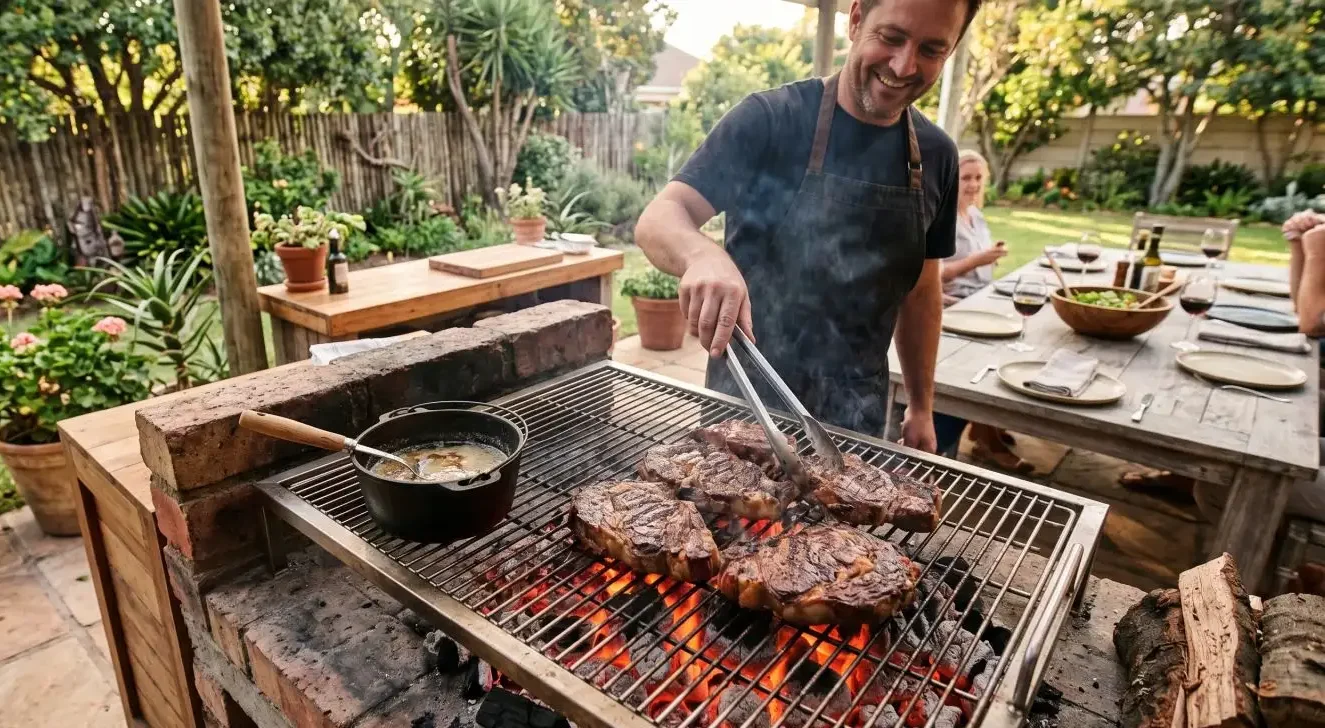
Once your pan is seasoned, cook something fatty in it immediately. A rib-eye steak, some boerewors, bacon, or roast potatoes cooked in tallow. High-fat cooking adds to the seasoning layer rather than stripping it, and the pan gets a little better with every meal.
Using tallow to cook in a tallow-seasoned pan is particularly satisfying — the fat you season with is the same fat you cook with, and both improve the surface over time.
Avoid starting with eggs or other delicate things until the pan has had a few good cooking sessions. Eggs are the test of a properly seasoned pan — not the first meal you cook in it.
A Note on Why This Matters
The pans in antique shops that are a hundred years old are still functional — often better than anything you can buy new — because they were built up slowly with animal fat and honest use.
Vegetable oils are a modern workaround. Tallow is the original. The reason those old pans performed so well is the same reason tallow works so well now: it is stable at heat, it bonds hard to iron, and it does not go rancid or break down the way refined oils do.
Starting your cast iron with good beef tallow is not a trend. It is returning to the method that produced the best pans in the first place.