
Before vegetable oil existed, the braai fire was built with wood and the meat was cooked in fat. Beef tallow was the fat. Not because it was trendy, and not because a nutritionist said so — because it worked. It handled the heat, it built the crust, and it made the meat taste the way meat is supposed to taste.
That has not changed. What changed is that people forgot.
The reason is simple: vegetable oil cannot do what animal fat does over a real fire. Tallow handles high heat without breaking down, it pulls a proper crust out of the meat, and it adds a depth of flavour that no refined oil can replicate. It is not a trend. It is just what was always used before the industry decided otherwise.
If you have tallow and a braai, here is how to use them together properly.
What tallow does at high heat
Beef tallow has a smoke point of around 200–215°C, depending on how it was rendered and how pure it is. That sits comfortably above the temperatures you are working with at the braai — a good bed of hardwood coals typically pushes between 180°C and 250°C. Tallow stays stable across that range without breaking down or producing off-flavours.
More importantly, tallow is high in saturated fat, which makes it structurally resistant to oxidation under heat. Where polyunsaturated oils begin degrading quickly once they start to smoke, tallow holds its composition for longer. The result is a fat that can baste repeatedly over a long braai without turning acrid or bitter.
The crust that forms when fat hits hot meat at high temperature is the result of the Maillard reaction — a chemical process where amino acids and sugars in the meat surface react to create hundreds of flavour compounds and that characteristic golden-brown bark. Tallow accelerates this process because it conducts heat evenly and keeps the meat surface dry enough for the reaction to take hold. Water suppresses the Maillard reaction; rendered animal fat encourages it.

Wood and coals — what you build the fire with matters
The wood is not a detail. A braai built on cheap or wet wood produces inconsistent heat, too much smoke, and coals that die before the meat is done. For tallow basting in particular — where you want sustained, even heat — the quality of the coals is as important as the fat itself.
Namibian hardwood has become the South African standard for a reason. The trees grow in low-rainfall conditions that produce dense, dry timber with very small internal water channels. That density translates directly into hotter, longer-lasting coals.
Kameeldoring (Camelthorn)
Kameeldoring is widely considered the best all-round braai wood available in South Africa. At a density of around 936 kg/m³, it burns longer and hotter than most alternatives, produces intense coals, and releases a distinct bushveld aroma that complements beef and lamb particularly well. It is harvested only from dead or fallen trees, which makes it a sustainable choice. For a serious braai — thick-cut steaks, a long basting session, a gathering — Kameeldoring is the wood to reach for.
Sekelbos (Sickle Bush)
Sekelbos burns fast and hot, producing large red-orange flames and excellent initial heat. It is useful for getting the fire going and building a base layer of coals quickly. Sekelbos alone will not sustain a long fire, but combined with Kameeldoring it produces an excellent braai setup: start with Sekelbos for heat, add Kameeldoring for endurance.
Mopane
Mopane burns slowly and produces coals that can last several hours. The heat output is lower than Kameeldoring, but it is a good choice for longer, more patient cooking — a leg of lamb, for example, or a potjie on the side.
Lump charcoal
If wood is not an option, lump charcoal made from hardwood is a practical alternative. It burns hotter and more cleanly than compressed briquettes, which contain binders and fillers that can affect the flavour of the meat. Avoid briquettes when using tallow — the combination of additives and basting fat produces a smoke that is not worth it.

Which cuts benefit most from tallow basting
Not every cut needs basting. A well-marbled ribeye has enough intramuscular fat to self-baste as it cooks. But tallow basting adds flavour and crust formation even on cuts that carry their own fat — and for leaner cuts, it makes a significant difference.
Thick-cut beef
Thick-cut steaks — ribeye, sirloin, T-bone, or rump — are the natural fit for tallow basting at the braai. The fat melts into the meat surface, aids crust formation, and adds a savoury depth that complements the beef without masking it. Aim for cuts at least 2–3 cm thick. Thin steaks cook through too quickly for basting to add much.
Lamb chops
Lamb rib chops and loin chops are the best cuts for the braai. Rib chops carry a good fat cap and render beautifully over high heat; loin chops are leaner but tender. Both benefit from tallow basting, particularly at the end of the cook, where it seals the surface and adds an additional layer of savouriness to the lamb fat that is already there. Keep them at medium-rare — the flavour lives in the fat, and overcooking dries that out.
Chicken thighs
Chicken thighs hold up to the braai far better than breast. The higher fat content of the thigh means it can take direct heat without drying out, and tallow basting during the final minutes adds colour and flavour to the skin. Score the skin before basting to help the fat penetrate.
Cuts that do not need it
Lean cuts like fillet present a common misconception: you would think that adding fat to a lean cut would make it juicier. But basting fat works on the outside surface of the meat, not the inside. What makes meat juicy is its internal fat and moisture. Tallow basting contributes flavour, crust, and surface colour — it does not replace the marbling that a good ribeye already has. On a very lean cut, the basting fat tends to sit on the surface, run off, and drip into the fire rather than binding with the meat. You are better off finishing fillet with a small knob of tallow melted over it the moment it comes off the fire — that brief contact does more than repeated basting during the cook. Boerewors does not need basting either — the casing fat renders on its own, and applying tallow to a sausage that may split will cause flare-ups on the grid.
How to use tallow at the braai
Melt it before you start
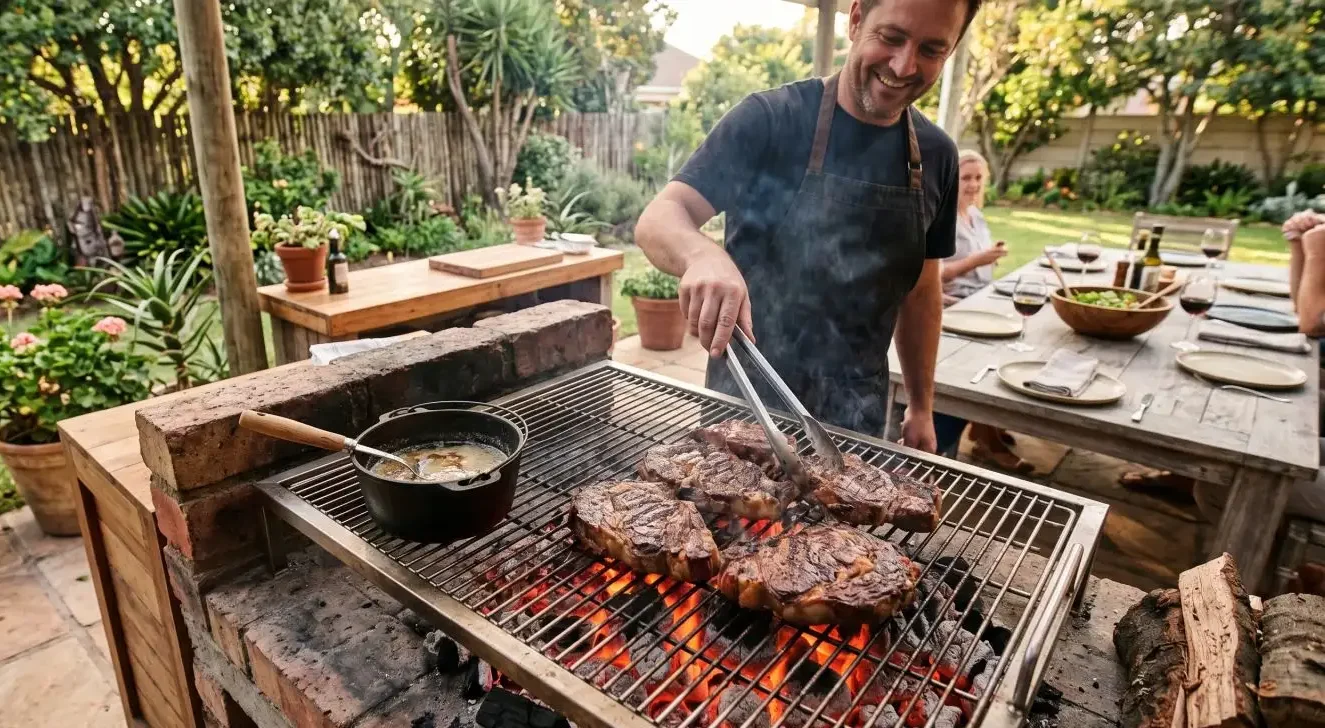
Tallow is solid at room temperature and melts at around 30–40°C — close to body temperature. It does not need direct flame or boiling water. Set a small cast iron pot or a sturdy metal container near the fire — close enough to feel the heat, but not over the coals. Within a few minutes it will be liquid and ready to use. There is no need to get it any hotter than that before basting.
Basting method
Use a heat-resistant silicone brush or a traditional cooking brush. Baste once the meat has had its initial sear and the surface has started to colour — this is when the Maillard reaction is already underway and the basting fat will add to it rather than slowing it down. Apply a thin layer, allow it to sear into the surface, then turn and repeat. Two or three applications per side is usually enough.
Cast iron over coals
A cast iron pan placed directly on the coals — or on a flat grid above them — allows you to cook with tallow as you would in the kitchen. Add a tablespoon of tallow to a very hot pan, wait until it shimmers, and sear the meat directly. This method works particularly well for lamb chops or chicken thighs where you want direct contact with the fat. The pan retains heat well and keeps temperatures consistent across the cooking surface. Cooking with tallow in cast iron over coals also does the pan no harm — quite the opposite. Seasoning is polymerised fat bonded to the iron surface, and tallow under heat reinforces that layer rather than stripping it. Each cook with tallow in a well-used cast iron pan builds on what is already there.
Dripping onto the coals
When tallow drips from a basted piece of meat onto the coals, it creates smoke and small flare-ups. A brief flare is not a problem — the smoke adds flavour. A sustained flare means too much fat is dripping, or the meat is positioned too close to the coals. Move the meat to a cooler part of the grid and allow the flare to settle before returning it.
Which tallow to use
For braaiing, rendered beef tallow is the right choice. It has the best balance of heat stability, flavour, and availability of any traditional basting fat. Lamb tallow works similarly and has a slightly sweeter, gamier character that suits lamb on the fire very well. Pork lard is a reasonable substitute if tallow is not available — it handles heat well and has been used at the braai for generations. Duck fat has a lower saturated fat content than tallow and is less heat-stable, so while it can be used for basting at moderate temperatures, it is not the first choice for high-heat coals.
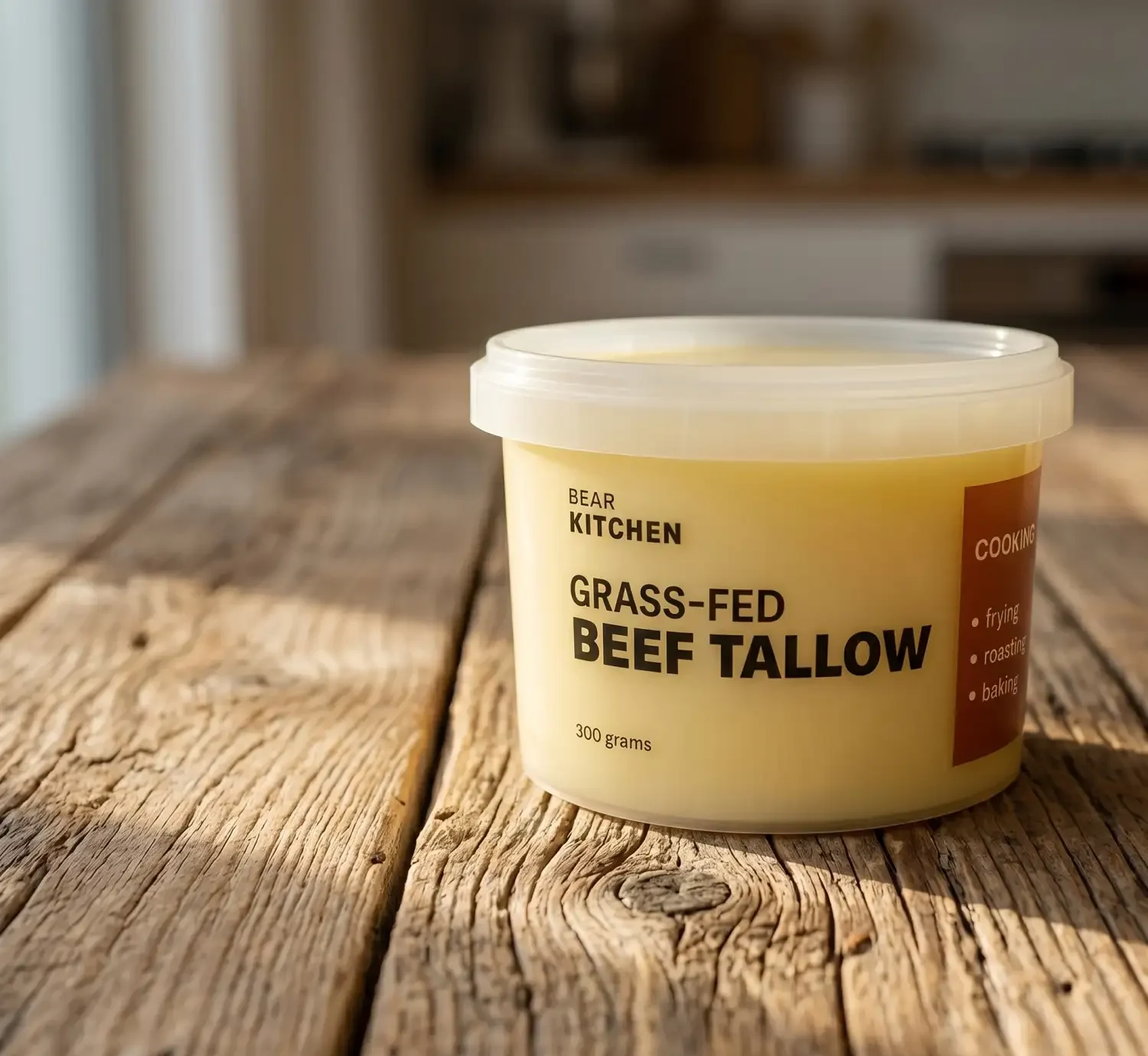
If you are looking for beef tallow to get started, Toeka stocks two options: Affieplaas tallow from pasture-raised, grain-finished cattle, and BEAR Kitchen tallow from grass-fed cattle. Both are single-ingredient, fully rendered, and suited to high-heat braai cooking.

A short note on flare-ups
Tallow and open fire are a natural combination, but flare-ups are worth managing. Keep a spray bottle of water nearby. If the fat catches and the flames rise, a short spray directly onto the coals is enough to bring them down without significantly dropping the temperature. Avoid using large amounts of tallow on lean cuts positioned directly over a concentrated coal bed — spread the coals flat and work with an even heat across the grid rather than a central hotspot.
Do not baste with raw (unrendered) fat. Use only fully rendered tallow — the rendering process removes the proteins and moisture that cause raw fat to smoke and spit aggressively.
Tallow at the braai is not a trend
Before anyone was selling avocado oil, before sunflower oil was in every kitchen, and before margarine convinced a generation that fat was dangerous — there was beef tallow on the fire and meat on the grid. That combination produced some of the best food people in this country have ever eaten.
The tallow has not changed. The fire has not changed. What changed is the fat in the shops.
Put the tallow back where it belongs.