
Two fats from different animals
Beef tallow and lard have more in common than most people expect. Both are rendered animal fats. Both have been used as primary cooking fats for centuries — tallow in European and African kitchens, lard across much of Europe, the Americas, and parts of Asia. Neither is a health trend. Neither requires a nutritionist to explain. They are simply what people cooked with before the food industry decided otherwise.
This post covers what sets them apart so you can decide which one belongs in your kitchen — or whether both do.
What is lard?
Lard is rendered pork fat. The best quality lard comes from the leaf fat — the dense, neutral fat surrounding the pig’s kidneys — which produces a white, almost flavourless fat with a fine texture. Lower-grade lard is rendered from back fat or mixed cuts and has a more pronounced pork flavour.
Lard has deep roots in European cooking — particularly in British, German, Polish, and Spanish kitchens — as well as in traditional South African cooking, where it was used in pastry, frying, and baking. High-quality leaf lard produces a pastry that is genuinely difficult to replicate with anything else — flaky, short, and tender in a way that butter cannot quite match.
At room temperature, lard is semi-solid and white. It melts cleanly and quickly when heated. Properly rendered lard stored in a sealed container keeps for several months at room temperature and longer in the fridge.
What is beef tallow?
Beef tallow is rendered beef fat, typically from the suet found around the kidneys and loins of cattle. The raw fat is melted slowly, strained to remove impurities, and cooled into a firm, white fat that is solid at room temperature and melts cleanly under heat.
Tallow was the everyday cooking fat in South African, European, and American homes for generations. It was used for frying, roasting, basting, and baking — and before that, for making candles and soap. It is not a new discovery. It is simply what was always in the pot.

How they compare
Smoke point
Both fats handle high heat well. Beef tallow sits between 200°C and 215°C depending on how it was rendered. Lard is similar — typically around 188°C to 205°C. In practice, the difference is small enough that both are suited to frying, roasting, and searing without trouble. Neither will give you problems at normal cooking temperatures.
Flavour
This is where the two fats part ways most clearly. Tallow has a mild, clean, savoury character. It does not impose itself on the food — it enhances what is already there. Well-rendered tallow cooked with good beef or vegetables largely disappears into the dish.
Lard from leaf fat is similarly neutral — almost completely flavourless, which is precisely why it works so well in baking. Lard from back fat carries a faint pork note that can work in the right context — beans, braised greens, certain stews — but can feel out of place in dishes where you do not want any meat flavour at all.
For most savoury cooking, both fats are mild enough to be interchangeable. The flavour difference matters more in baking and pastry, where lard’s neutral character and fat crystal structure give it a specific advantage.
Nutritional profile
Tallow and lard have broadly similar nutritional makeups — both are predominantly saturated and monounsaturated fat, which is what makes both stable under heat and resistant to oxidation. Tallow sits slightly higher in saturated fat; lard is higher in monounsaturated fat, closer in composition to olive oil than most people expect. Both carry fat-soluble vitamins. Neither breaks down and oxidises rapidly under heat the way polyunsaturated fats do.
The quality of either fat depends heavily on what the animal was fed and how it was raised. Tallow from well-raised cattle and lard from pasture-raised pigs will both carry a better nutrient profile than fat from animals raised entirely in confinement. As with most whole foods, the source matters.
Culinary uses
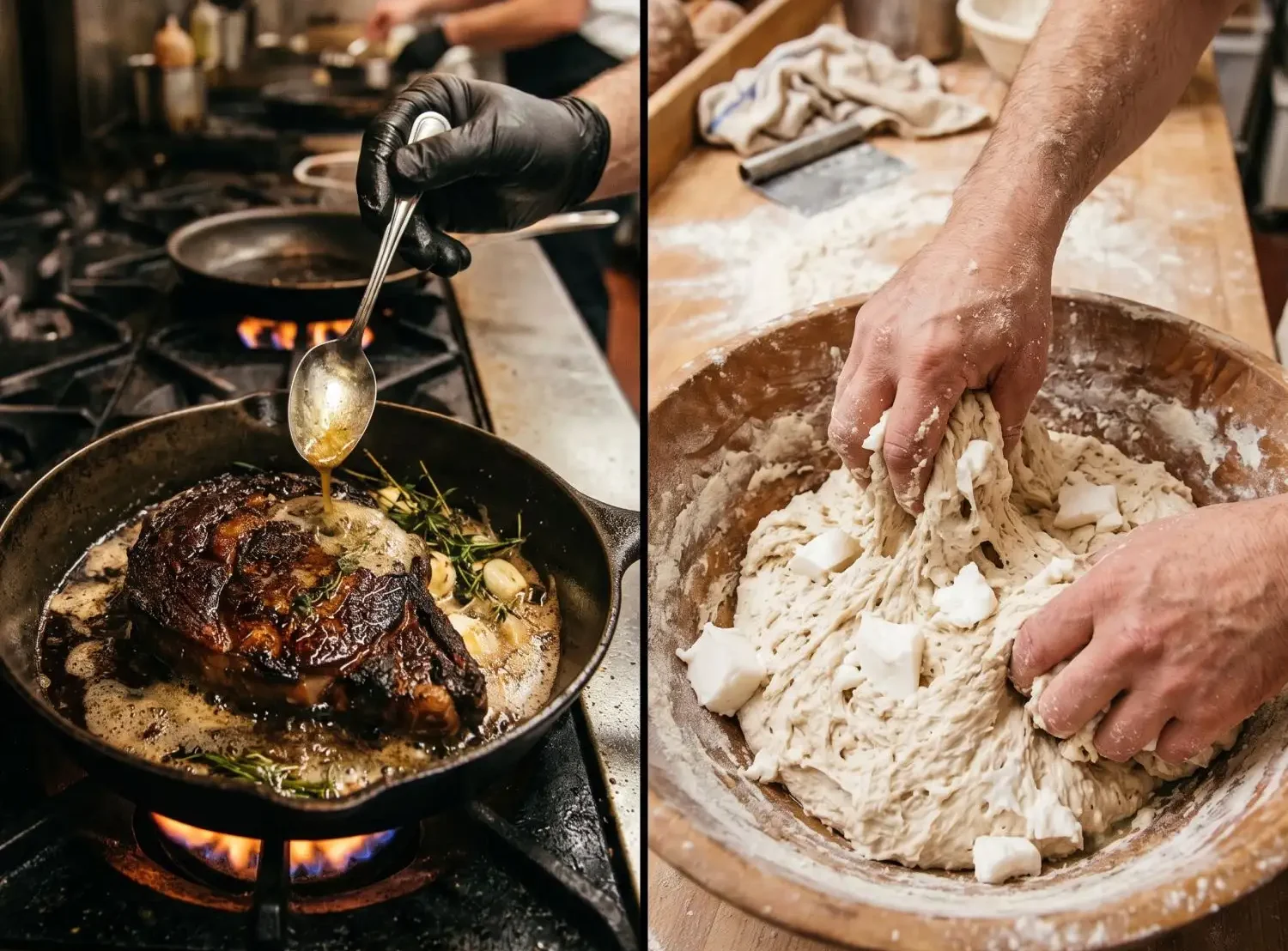
Tallow is the better choice for high-heat savoury cooking where you want a stable, neutral fat — roasting, frying, basting meat, cooking on cast iron, or anything where the cooking fat should work without being noticed. It is also the traditional fat for seasoning a cast iron pan.
Lard earns its place most obviously in pastry and baking. Leaf lard in particular produces a flakiness and texture in pie crusts and savoury pastries that is genuinely hard to match. It also works well in traditional recipes where pork fat is part of the flavour — slow-cooked beans, cassoulet, certain breads, and fried foods where a faint richness suits the dish.
Both are worth knowing. They are not really competitors — they came from different animals and different cooking traditions, and they each do certain things that the other does not.
Availability in South Africa
Lard is available in South Africa through some butchers, specialty food stores, and occasionally in supermarkets — though quality varies and it is not always easy to find. If you come across it, check whether it is pure rendered pork fat or a hydrogenated shortening labelled as lard, which is a different product entirely.
Beef tallow is less commonly stocked in mainstream retail but is available from butchers, online, and through specialist producers. It is generally the more accessible of the two for South African home cooks.

Which one to reach for
If you are roasting vegetables, frying meat, cooking on cast iron, or need a stable everyday cooking fat — reach for tallow. It is clean, neutral, and handles heat without fuss.
If you are making pastry, pie crust, or a traditional recipe where pork fat is part of the dish — reach for lard, and try to find leaf lard if you can.
Finding tallow in South Africa
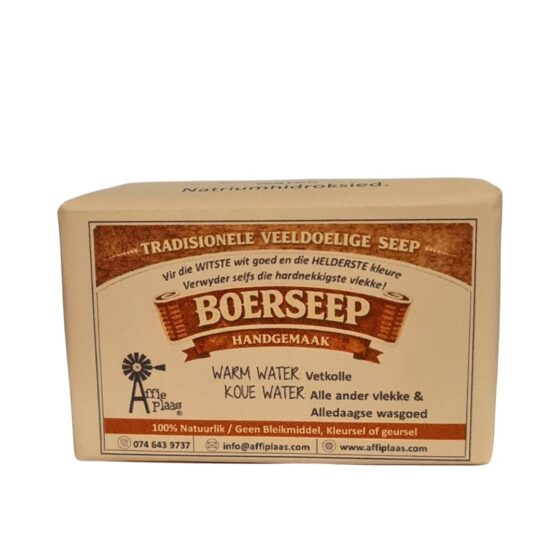
If you are looking to cook with beef tallow, Toeka stocks options from two producers: Affieplaas, from grain-fed cattle, and BEAR Kitchen, from grass-fed cattle. Both are single-ingredient, fully rendered, and suited to everyday cooking at any heat.
The question is not which is better
Tallow and lard were both in traditional kitchens for good reason. They came from different animals and served different purposes — one at the braai, one in the baking dish. Cooks who knew both reached for the right one without thinking twice about it. The question was never which is better. It was always which one suits what you are making.


