
There is a fat that South African kitchens ran on for generations before the cooking oil aisle existed. It came in a jar, not a bottle. It had no ingredient list because it did not need one. It was just fat — rendered from beef, kept near the stove, and used without much thought for frying, roasting, baking, and anything else that needed heat and flavour.
Then vegetable oil came along, and somewhere along the way the jar disappeared.
If you have been hearing about beef tallow lately and want to understand what it actually is — not the sales pitch, just the facts — this is that post. What it is made of, where it comes from, how the colour varies, and what to do with it once you have it.
What Is Beef Tallow?
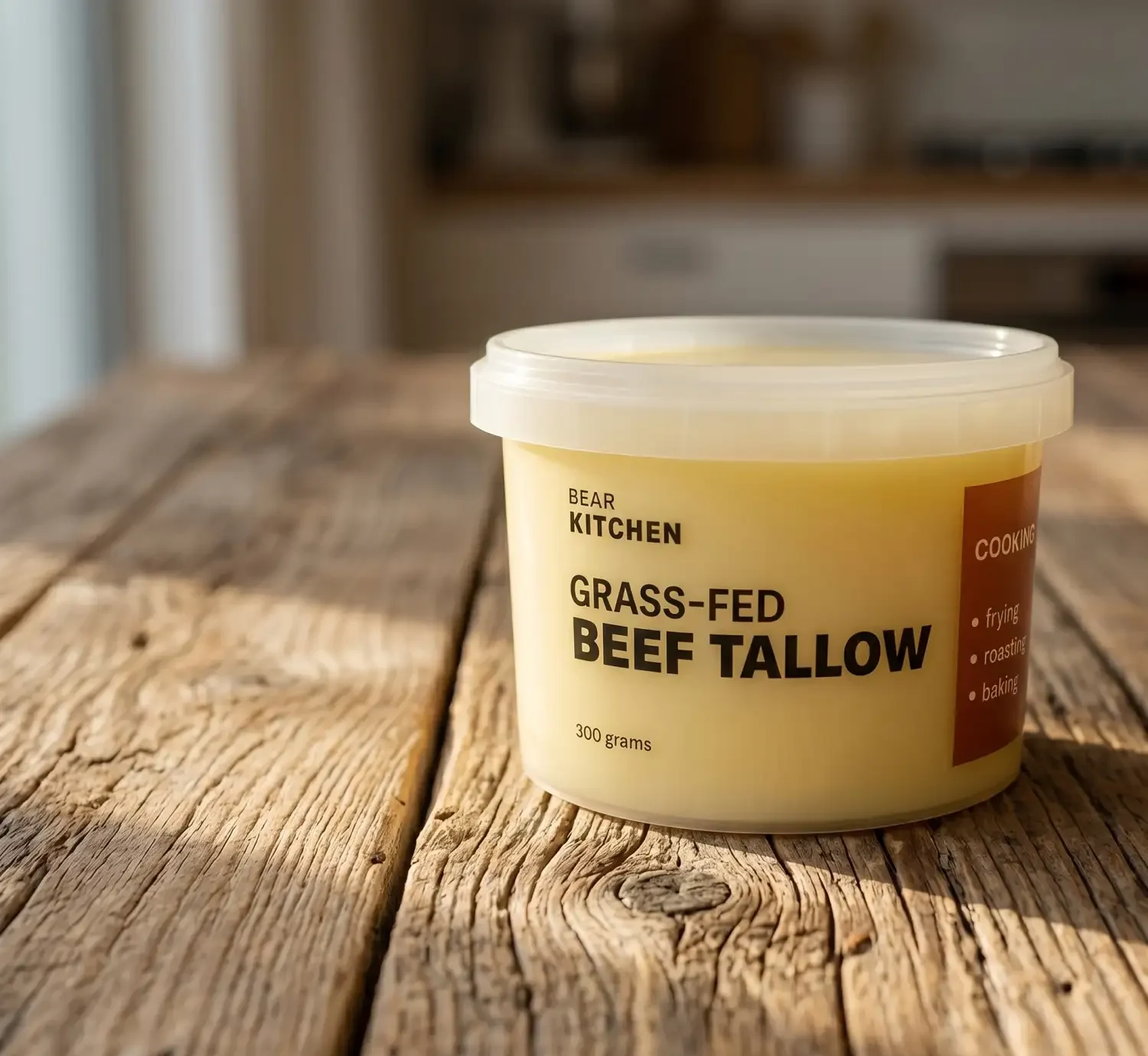
Tallow is rendered beef fat. It comes from the hard fat deposits found around the kidneys and loins of cattle, a raw fat known as suet. When that fat is slowly heated, it melts down into a clean, stable cooking fat that sets solid when cooled.
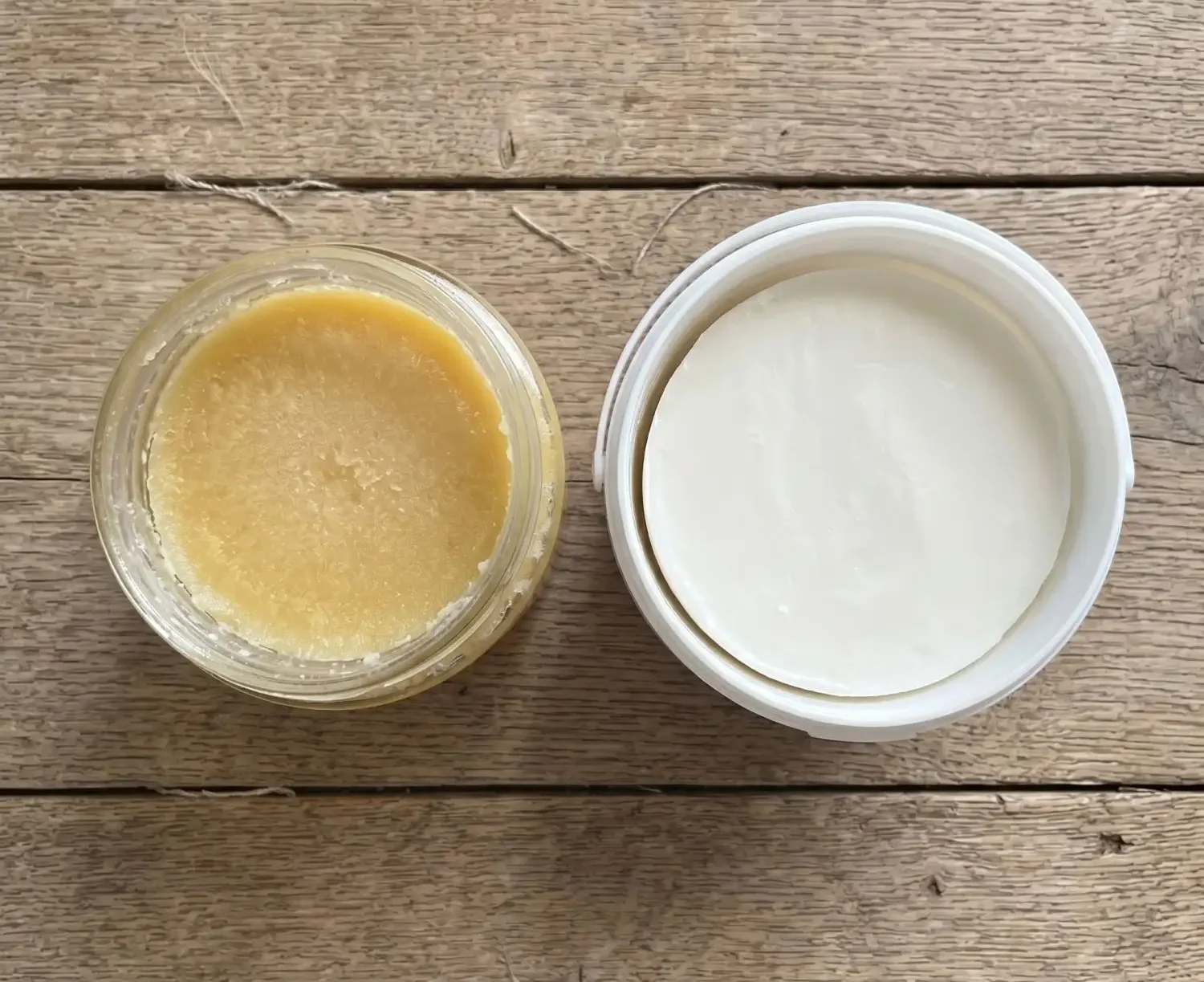
At room temperature it is a pale solid, white or yellow depending on the source. Cold, it has almost no smell. Once it hits a hot pan though, it smells distinctly beefy — and the first few times, quite strongly so. Some people find it off-putting at first, which is a reasonable reaction. What changes with repeated use is not that the smell disappears, but that you get used to it. After enough cooks it becomes a normal part of the kitchen rather than something that demands your attention. It is still there every time, just no longer surprising.
Tallow is not the same as dripping, which is the fat collected from a roasting tray and carries all the flavour compounds from the meat. Tallow is rendered specifically as a cooking fat, which gives it a cleaner result. It is also not lard — lard is rendered pork fat. Different animal, used similarly, different flavour profile.
How Is Tallow Made?
The raw fat is slowly heated until it melts and separates from any impurities — a process called rendering. It is then strained and poured into containers to set. That is essentially the whole process, and it has not changed in any meaningful way for centuries.

Grass-Fed vs Grain-Fed: What’s the Difference?
If you have spent any time reading about tallow, you will have noticed that ‘grass-fed’ appears on almost every product description as a signal of quality. It deserves a proper explanation, because the difference is real and measurable rather than just a marketing label.
Grass-fed tallow
Cattle that graze on pasture their whole lives produce fat that is nutritionally richer than that of grain-fed animals. A natural pasture diet gives the animal a more varied, natural diet, and that shows up directly in the fat.
Grass-fed tallow has more omega-3 fatty acids relative to omega-6. Omega-3s are the fatty acids most people are actively trying to get more of — they support heart health, help reduce inflammation in the body, and play a role in keeping joints comfortable. The ratio between omega-3 and omega-6 in a modern diet is badly skewed toward omega-6, largely because of grain-fed animal products and vegetable oils, and grass-fed fat helps bring that back into a more balanced range.
It also has higher levels of fat-soluble vitamins, particularly vitamin K2, vitamin E, and beta-carotene. Vitamin K2 is one of the harder vitamins to get from food — it plays a role in how the body moves calcium to where it belongs, which matters for bone strength and cardiovascular health. Beta-carotene is what gives grass-fed tallow its distinctive yellow colour, and it is also what the body converts into vitamin A.
Then there is CLA, or conjugated linoleic acid. CLA is found almost exclusively in the fat and dairy of ruminants that graze on grass, and grass-fed tallow has significantly more of it than grain-finished tallow. It has been studied for anti-inflammatory properties that are relevant both to general health and to how the skin responds when tallow is used topically.
Grass-fed tallow tends to have a slightly more pronounced flavour because of all of the above. For high-heat cooking where the fat contributes character to the dish, this is an advantage.
Grain-fed or grain-finished tallow
Grain-finished cattle — those raised on pasture but moved to a feedlot diet in the final weeks or months before slaughter — produce fat with a different profile. The omega-3 content drops, CLA concentration is lower, and the fat-soluble vitamin content is reduced compared to fully grass-fed animals. The finished tallow is typically white and more neutral in flavour.
None of that makes it a bad cooking fat. Grain-finished tallow is still primarily made up of saturated fat, which is the characteristic that makes it stable at high heat and resistant to going rancid on the shelf. It is still free of the processing and additives that refined seed oils carry, still a clean single-ingredient fat. For everyday cooking — frying, baking, pastry work, anything where you want the fat to do its job without drawing attention to itself — it performs well. The nutritional gap between grass-fed and grain-finished matters most if tallow is a regular part of your diet rather than an occasional addition.
The honest position
Grass-fed tallow carries a nutritional advantage that is real and documented. Whether that justifies the price premium depends on how often you use it. For daily cooking or skin application, the difference adds up. For occasional use, the gap is smaller. Both are meaningfully better than the refined seed oils they tend to replace, and the comparison between the two only becomes relevant once you have decided tallow is worth using in the first place.
Why Tallow Is Stable at High Heat
One of the reasons tallow has made a quiet comeback in serious cooking circles is its behaviour at high temperatures. Most people know about the smoke point — the temperature at which a fat starts to burn and smoke. Tallow sits between 200 and 250 degrees depending on how refined it is, which comfortably covers the heat of a hot cast iron pan, a braai grid, or a deep fryer.
But the smoke point is not the whole story. What matters almost as much is what happens to the fat’s chemistry under sustained heat. Fats high in polyunsaturated fatty acids — sunflower oil, canola, corn oil — can oxidise when heated repeatedly, producing compounds that are best avoided. Tallow, being primarily saturated and monounsaturated fat, does not have this problem. That high saturated fat content — the same characteristic that keeps it shelf-stable at room temperature — is what makes it chemically stable in the pan too. Its structure simply does not break down under heat the way polyunsaturated fats do.
| Fat | Smoke Point | Notes |
| Beef tallow (unrefined) | ~200°C | Ideal for frying, searing, roasting |
| Beef tallow (refined) | ~250°C | Suitable for very high-heat cooking |
| Avocado oil | ~270°C | One of the highest smoke points available; neutral flavour |
| Butter | ~150°C | Burns quickly at high heat |
| Extra virgin olive oil | ~160°C | Best for low heat and finishing |
| Sunflower oil (refined) | ~225°C | High smoke point, but polyunsaturated — oxidises over time |
| Coconut oil | ~177°C | Adds strong coconut flavour |
What Tallow Is Used For
Tallow is broadly useful across the kitchen. The same jar that seasons a cast iron pan can fry the chips, roast the potatoes, and baste the braai vleis.
Cooking tallow and skincare tallow are not the same product. Tallow used in skincare formulations is rendered and processed to a different standard. Using cooking tallow on your skin is not harmful, but the two products are made for different jobs. If you are looking at tallow for skin use, check that what you are buying is formulated for it.
In the kitchen
- Frying and deep frying: Tallow’s high smoke point and heat stability make it one of the best fats available for sustained high-heat frying — chips, vetkoek, chicken, fish. Before seed oils took over the fast food industry in the 1980s, most commercial deep frying was done in beef tallow. The flavour difference was so obvious that when chains switched to vegetable oil, they had to add artificial flavour back in.
- Searing and pan frying: A tablespoon in a hot cast iron pan gives you an even, high-heat surface that builds a proper crust on meat. For steak in particular, tallow produces a sear that is difficult to replicate with any other fat.
- Roasting: Tallow coats vegetables and meat evenly, producing a crust that is properly crisp. Roast potatoes in tallow are a noticeably different experience from those cooked in vegetable oil.
- Braai: Tallow handles hardwood fire heat without flaring or smoking excessively the way oil-based marinades can. Brush the grid or the food itself before placing over the coals, particularly for leaner cuts like chicken breast or fish.
- Baking: Tallow is a traditional baking fat with a longer history in South African kitchens than butter. It produces a short, crumbly pastry well suited to savoury pies and rusks.
- Seasoning cast iron: Tallow is one of the best fats for building the polymerised seasoning layer on cast iron cookware. The old pans in antique shops that still outperform new ones were built on exactly this.

How to Store Tallow
Tallow is one of the most shelf-stable cooking fats available. Its high saturated fat content — the same fat structure that keeps it stable in the pan — also makes it resistant to going rancid without refrigeration. Low moisture does the rest. This is one of the practical reasons traditional households relied on it long before modern refrigeration was common.
- At room temperature: Sealed and away from direct sunlight, tallow keeps for up to 12 months. In a South African summer kitchen it will be soft or fully liquid — this is normal and does not affect quality.
- Refrigerated: Indefinitely. Cold tallow will be very firm — let it come to room temperature before scooping, or sit the jar briefly in warm water.
- Frozen: Tallow freezes well and keeps for several years. Portion into an ice cube tray before freezing for convenient cooking-sized amounts.
- Signs it has turned: Good tallow smells neutral to mildly savoury. Tallow that has gone rancid smells sour or paint-like. If in doubt, discard. Properly stored tallow rarely spoils.
The white crystallisation that sometimes appears on stored tallow is not mould. It is harmless and dissolves completely when heated. Mould would appear as coloured spots with a musty smell, which is rare in properly stored product.
A Short History
Beef tallow is not a trend. It is among the oldest cooking fats in human history, used across cultures wherever cattle were raised. In South African kitchens specifically, animal fat — tallow, lard, and the fat rendered from the Sunday roast — was the default cooking medium well into the twentieth century.
The shift happened in the mid-to-late 1900s. Seed oils — sunflower, canola, soybean — were cheap to produce at industrial scale, and a generation of public health guidance presented saturated fat as the primary dietary villain. Animal fats fell out of favour in commercial kitchens and home pantries alike.
The nutrition science has shifted considerably since then. What South African grandmothers understood from experience — that the fat in the jar did its job without fuss and lasted on the shelf without spoiling — has turned out to be a reasonably accurate description of what makes tallow worth using. The jar is back. The jar was always fine.