
Galbanum is not a name most people recognise. It does not appear on the labels of mainstream products. It is not trending. But it is named in the book of Exodus, in the same recipe that includes frankincense. It appears in ancient Egyptian temple preparations recorded more than two thousand years before the common era. And it remains, today, one of the most valued raw materials in the global fragrance industry — responsible for the entire “green note” family of modern perfumery, with a price that reflects just how rare and difficult it is to source.
That is a remarkable span for a resin that grows in the mountains of Iran. But galbanum’s staying power is not accidental. It is the record of something genuinely useful, genuinely aromatic, and genuinely hard to replace.
This post covers what galbanum is, where it comes from, what the historical record says about it, what traditional medicine has used it for, and what early research is beginning to show. It also covers what it smells like — which is, in many ways, the starting point for understanding why this resin has mattered so much for so long.
Where Galbanum Comes From
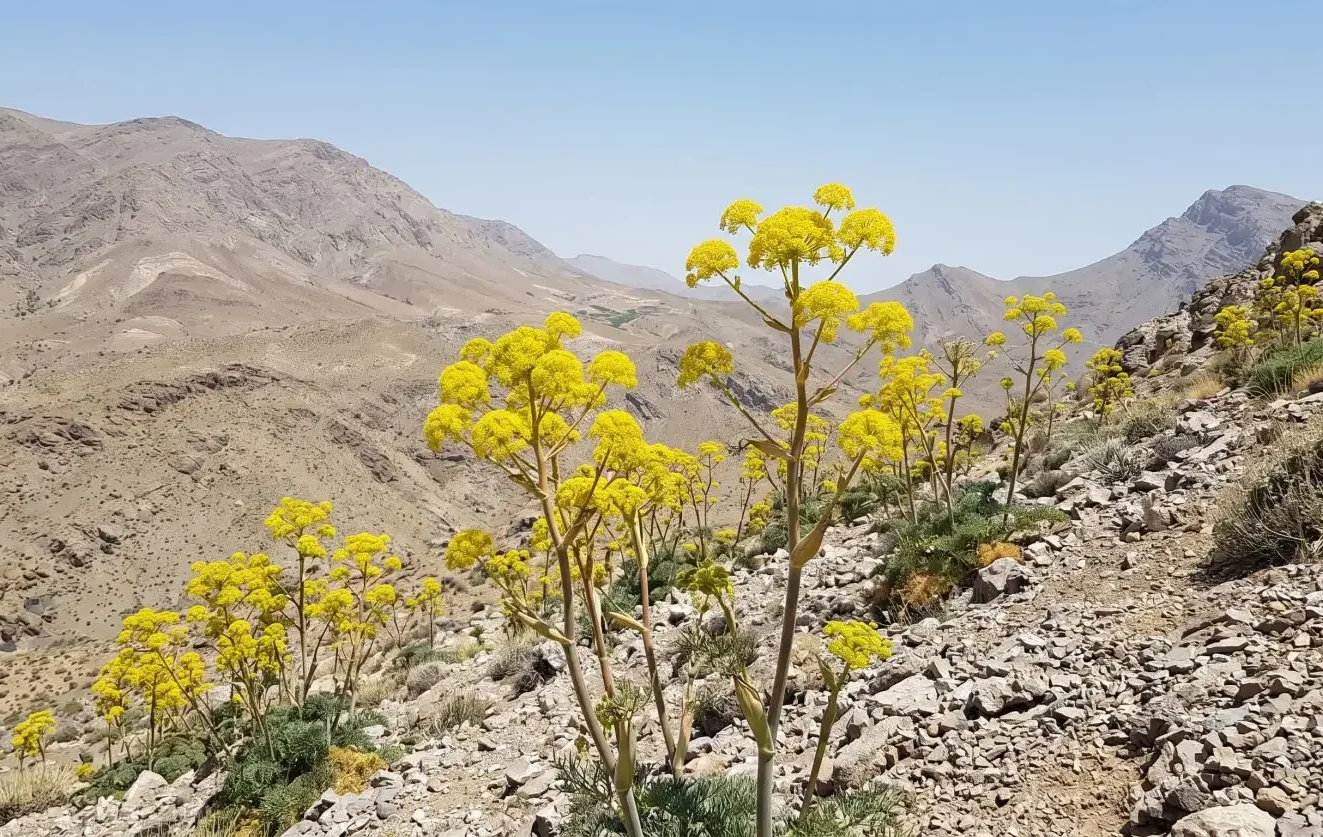
Galbanum is an oleo-gum-resin — a combination of essential oil, gum, and resin — produced by plants of the Ferula genus, primarily Ferula gummosa and Ferula galbaniflua (the two names refer to the same species). These are perennial herbs belonging to the Apiaceae family — the same plant family as carrots, parsley, and celery — which grow wild on the arid, rocky slopes of northern Iran, Afghanistan, and Turkey, typically at altitude.
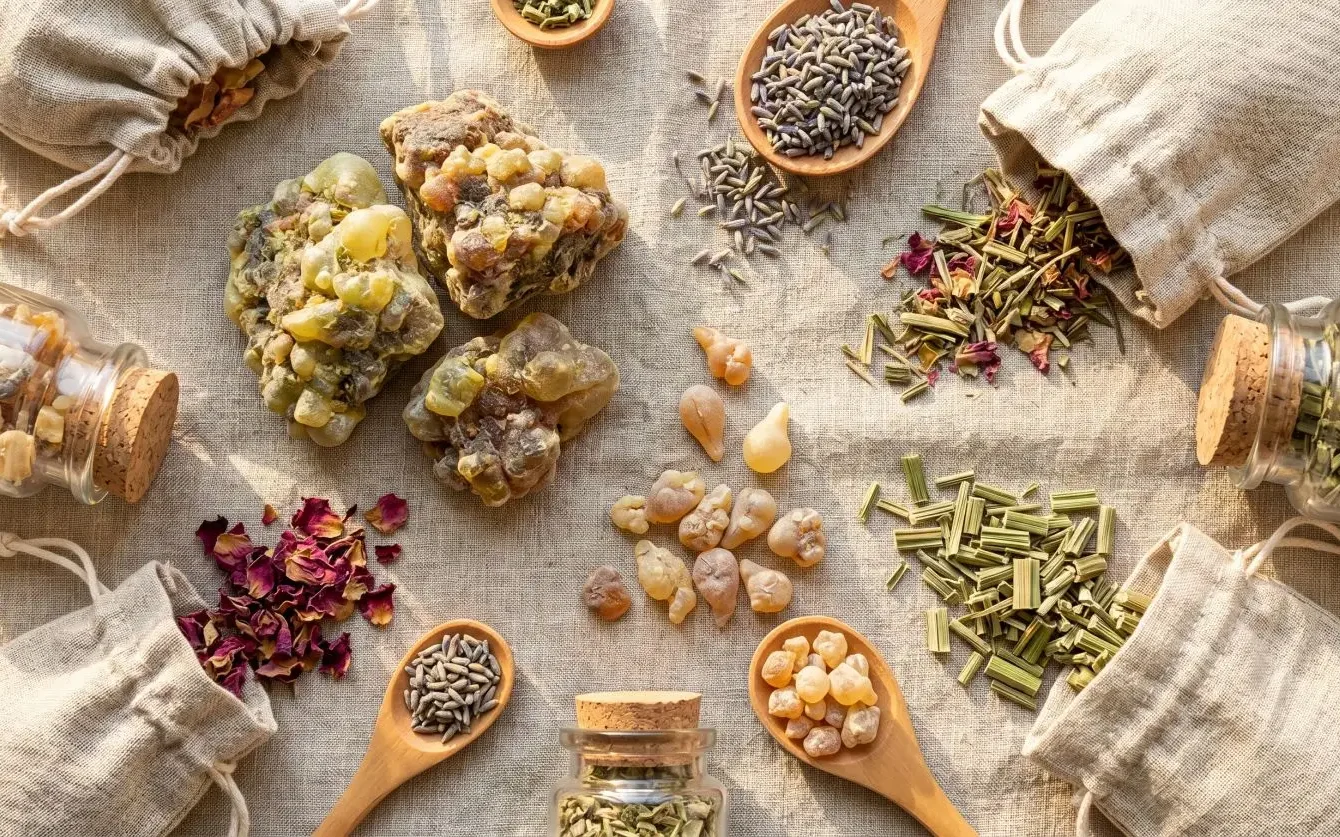
The plant grows to roughly two metres tall with thick stems and yellow flowers. The resin is not collected from leaves or bark. It comes from the collar of the plant — the transitional zone between the aerial stem and the underground root — harvested by making careful incisions near the base. A milky white sap weeps from the cuts and hardens on exposure to air into the irregular, translucent lumps that give galbanum its characteristic appearance: pale yellow to greenish-yellow, slightly waxy, and intensely aromatic even in raw form.
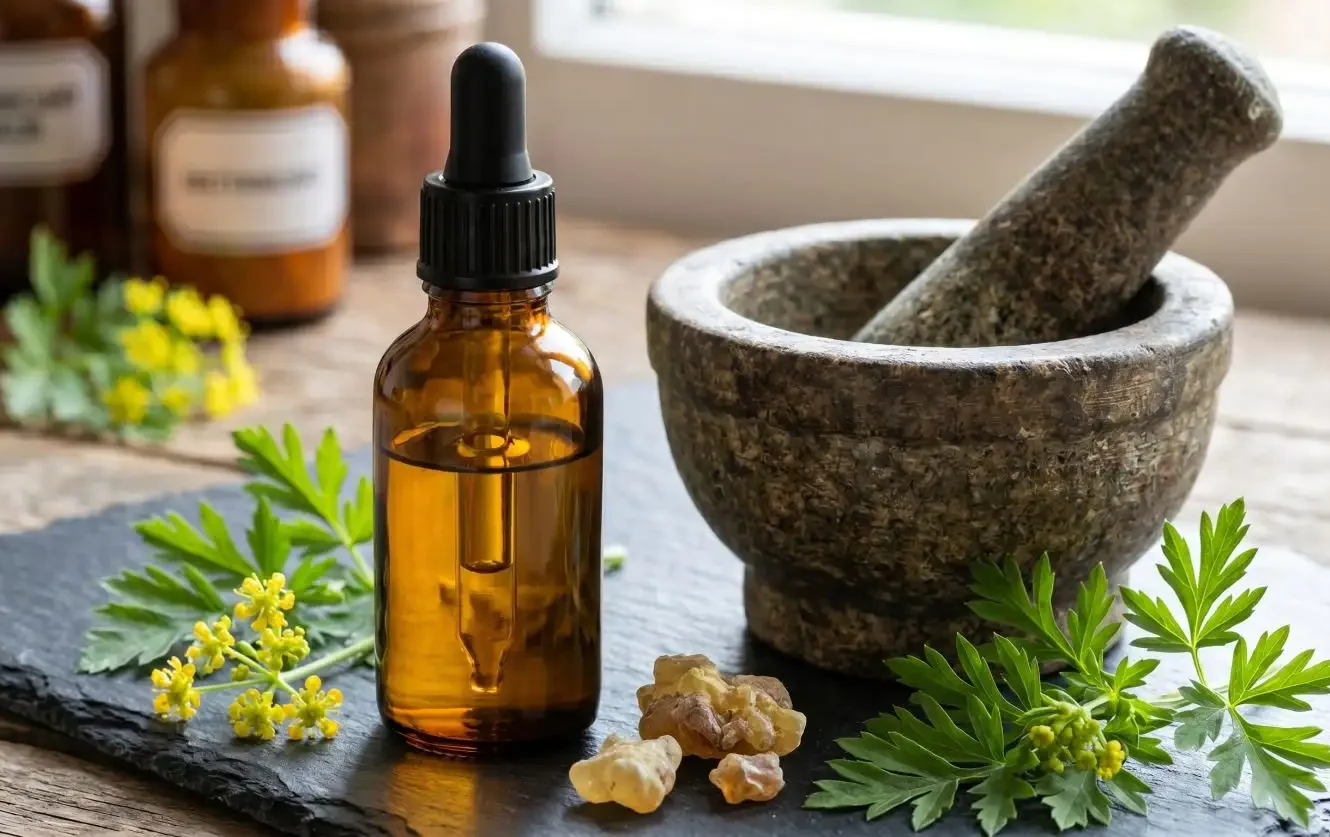
The harvested resin can be used directly, as incense or in traditional preparations, or processed further. Steam distillation of the resin produces galbanum essential oil. Solvent extraction produces galbanum resinoid, which has a deeper, richer character and is prized in fine perfumery for its fixative properties. Both forms are expensive — Iran remains the dominant supplier of commercial galbanum, and supply is limited by the plant’s wild-growing nature and the labour-intensive harvest process.
Galbanum in Scripture
Galbanum’s appearance in the Bible is specific and significant. It is not a passing reference. It appears in one of the most precisely described sacred preparations in the entire Old Testament.
Exodus 30:34 records God’s instruction to Moses on the composition of the holy incense — the ketoret — to be burnt twice daily in the Tabernacle. The passage names four botanical ingredients: stacte, onycha, galbanum, and frankincense. These are described as “sweet spices” — aromatics of exceptional quality chosen for sacred use. The instruction is explicit that this formula was not to be reproduced for any other purpose. It was consecrated.
This is the same Exodus 30 passage that defines the anointing oil tradition — the tradition that also runs through spikenard and calamus. Galbanum’s presence in that recipe places it among the most carefully considered aromatic choices in scripture — not as a fragrant flourish, but as one of a small number of botanicals deemed worthy of the most sacred ritual in the Tabernacle.
Galbanum is also named in Sirach 24:15 — a book known in older translations as Ecclesiasticus, and included in Catholic and Orthodox Bibles. The passage uses galbanum as a metaphor for divine wisdom, placing it alongside onycha, stacte, and frankincense — the same aromatics from the Exodus incense recipe. Its appearance there confirms what the Exodus reference implies: this was not an obscure ingredient. It was one of a small number of resins considered worthy of the most sacred comparisons a biblical writer could reach for.
The ancient Egyptians record it even earlier. Galbanum appears in Egyptian temple preparations and incense formulas dating back more than two thousand years before the common era — among the oldest documented uses of any aromatic resin. The Greek physician Hippocrates referenced it. Dioscorides, writing in the first century, listed it in his materia medica and noted its use by Egyptian physicians under the name Metopian. Pliny the Elder documented it in his Naturalis Historia. The historical record for galbanum is not fragmentary. It is continuous, detailed, and spans independent civilisations that had no contact with one another.
What Galbanum Actually Smells Like
Galbanum has one of the most distinctive and difficult-to-describe scent profiles in the botanical world. The immediate impression is intensely green — not floral green, not fresh-cut grass green, but something deeper and more complex: earthy, slightly bitter, vegetal in a way that evokes crushed stems, damp undergrowth, and raw resin simultaneously. Underneath that green character there is a warm balsamic base, a faint spiciness, and a woody depth that anchors the whole composition and prevents it from feeling sharp or thin.
In perfumery, galbanum holds a position that few natural materials can claim: it is considered the founding ingredient of the “green” family of fragrances. The sharp, living greenness that has appeared in fine fragrance since the mid-twentieth century traces directly back to this resin. Chanel No. 19, created using a superior grade of Iranian galbanum, is the most famous example. When the Iranian Revolution of 1979 disrupted supply, perfumers around the world had to reformulate products that depended on it — which says something significant about how irreplaceable the ingredient was considered to be.
Galbanum is also a powerful fixative. It anchors lighter top notes, extends a fragrance’s longevity on skin, and adds a structural depth that synthetic alternatives can approximate but have never fully replicated. This dual role — as both a distinctive scent note and a fixative — is part of why it has been used in perfumery from ancient Egypt to the present day.
For aromatherapy, the scent character is described as grounding and clarifying. It is not heavy in the way that vetiver or patchouli can be. It is more penetrating and cooler, with a quality that some practitioners describe as focusing the mind rather than simply quieting it. Used in small amounts — it is potent enough that a little goes a long way — it adds depth and longevity without dominating a blend.
Galbanum blends well with frankincense, spikenard, cedarwood, sandalwood, myrrh, and citrus oils. In therapeutic oil blends, its role is usually structural: the note you feel in the background rather than the one you identify on first impression.
Traditional Uses and Benefits
The traditional uses of galbanum span Persian, Egyptian, Ayurvedic, Greek, and Western herbal traditions. The following reflects the historical record alongside what early research has begun to explore. Human clinical evidence is limited for most applications and is noted where it exists. Where research is absent, the traditional record is presented as exactly that.
Anti-inflammatory and Pain Relief
The most consistent traditional use of galbanum across multiple systems is for inflammatory conditions — joints, muscles, and skin. Persian traditional medicine used it extensively for rheumatic complaints and surface inflammation. The plant’s active compounds include galbanic acid, a constituent that has shown activity in modulating inflammatory pathways, and monoterpenes including β-pinene, which contribute to its anti-inflammatory and antimicrobial profile.
There is one notable human clinical trial on record. A 2016 randomised controlled trial published in Traditional and Integrative Medicine compared topical galbanum oil against topical diclofenac gel — a standard pharmaceutical anti-inflammatory — in 32 patients with chronic knee pain due to osteoarthritis. Patients applied their respective treatments three times daily for one month. The study found no statistically significant difference between the two groups in pain reduction, morning stiffness, or physical function at one or two months of follow-up. The authors concluded that galbanum oil appeared clinically effective for knee osteoarthritis and noted its herbal base and fewer side effects as potential advantages over the pharmaceutical comparator.
Important context: this is a small trial and the findings would need to be replicated at larger scale before firm clinical conclusions can be drawn. It is, however, a rigorous design — a randomised controlled comparison against an active pharmaceutical — and the result is meaningful as a starting point.
Skin Health and Wound Healing
Galbanum has been used in wound care and skin preparations across many traditional systems. A 2025 study published in Chemistry & Biodiversity investigated the antioxidant, antimicrobial, and wound-healing properties of Ferula galbaniflua extract compared to zinc oxide ointment in a rat model. The extract showed significant antioxidant activity, antimicrobial properties against specific bacteria, and a statistically significant increase in collagen synthesis in treated groups. The authors concluded that galbanum presents as a promising natural remedy for skin inflammation. This is consistent with the resin’s documented use in traditional Iranian medicine for treating skin conditions and promoting wound repair.
Respiratory Support
Galbanum has a long traditional association with respiratory health — coughs, bronchial congestion, and asthma. Its expectorant and antispasmodic properties are noted across Persian and Egyptian traditional records, and Dioscorides specifically mentioned its use for respiratory complaints in his first-century materia medica. The monoterpene compounds in the essential oil — particularly the pinenes — are consistent with bronchodilatory and expectorant activity, though human clinical research in this specific application is lacking.
Digestive and Antispasmodic Support
Traditional use in Persian medicine included galbanum as an antispasmodic — used for digestive cramping, flatulence, and muscular spasm. The sesquiterpene compounds in the resin have shown smooth-muscle relaxant activity in laboratory studies, which provides a plausible mechanism for these applications. Its use in incense and aromatherapy for grounding and focusing the mind reflects a separate traditional association with the nervous system, though this is less well documented than its anti-inflammatory and antispasmodic applications.
How to Use Galbanum
- Aromatherapy: Add a small amount — one to two drops is typically enough — to a diffuser. Galbanum is potent and can quickly overwhelm other components in a blend if used heavily. Its clarifying, grounding character makes it suitable for meditation, focused work, or evening use. It blends well with frankincense, spikenard, cedarwood, sandalwood, and myrrh.
- Topical application: Always dilute in a carrier oil before applying to skin — typically one to two drops per teaspoon of carrier such as jojoba, olive, or hemp seed oil. Perform a patch test on the inner forearm and wait 24 to 48 hours before wider use.
- As incense resin: Raw galbanum resin can be burnt on a charcoal disc in the traditional manner. This is the form in which it has most often been used in ceremonial contexts, and the aroma produced from burning the raw resin is richer and more complex than the steam-distilled essential oil.
- In blended products: Galbanum is a common ingredient in therapeutic oil blends, where the dilution and carrier oil are already handled by the formulation. Its structural and fixative qualities make it a natural inclusion in multi-ingredient healing oil preparations.

Galbanum in Kings-Oil Wonder Oil and Wonderworking Oil
Galbanum is one of the four botanical oils in Kings-Oil Wonder Oil, alongside frankincense, spikenard, and turmeric, in a cold-pressed hemp and olive oil base. It also appears in Kings-Oil Wonderworking Oil, which is the range’s recommended starting point for acute joint and muscle pain.
The inclusion of galbanum in both formulations is not incidental. Three of the four ingredients in Wonder Oil — frankincense, galbanum, and spikenard — appear together in the Exodus 30 tradition of sacred anointing oils. They have been used in combination, not in isolation, across the ancient record. The Wonder Oil formulation draws directly on that tradition.
Within the blend, galbanum contributes its traditional anti-inflammatory and antispasmodic properties alongside the other botanicals. Its structural role as a fixative also means it supports the longevity and integration of the other oils in the formulation — the same function it has served in perfumery and healing preparations for four thousand years.
Understanding what galbanum is and where it comes from makes the Kings-Oil ingredient list more legible. These are not exotic names chosen to sound impressive. They are plants with documented histories of use in exactly the applications the products are designed for.
A Note Before You Use It
Galbanum essential oil can cause skin sensitivity in some individuals. Always perform a patch test on a small area of skin — the inner forearm is a good choice — before widespread topical use. Apply diluted in a carrier oil, never neat.
If you are pregnant or breastfeeding, consult a healthcare professional before using galbanum essential oil. As with most essential oils, there is limited clinical research on its safety during pregnancy, and caution is the appropriate approach.
If you have any underlying health conditions or are taking medication, consult a healthcare professional before use.
Products containing galbanum — including Kings-Oil Wonder Oil and Wonderworking Oil — are complementary health products and have not been evaluated by SAHPRA for quality, safety, or intended use. They are not intended to diagnose, treat, or cure any medical condition.
Four Thousand Years and Still Here
Galbanum appears in the oldest written aromatic recipes on record. It is named in Exodus. It is documented by every major ancient civilisation that encountered it — Egyptian, Greek, Roman, Persian. It is the ingredient that modern perfumers consider responsible for an entire family of scent. And it is still being researched by pharmacologists trying to understand exactly what it does.
Most ingredients do not survive that kind of scrutiny. They fall out of use as knowledge systems change, as trade routes shift, as something more convenient appears. Galbanum has outlasted most of them — not because it was protected by tradition, but because the people who worked with it, across entirely independent cultures and entirely different applications, kept finding it useful.
The temple priest, the Egyptian perfumer, the Persian physician, and the modern fragrance house all arrived at the same resin through different routes. That kind of convergence, across four thousand years, is worth paying attention to.
