
There are not many things that appear in the gift given to a newborn king, in the sacred incense prescribed by God to Moses, and in the research papers of modern oncologists. Frankincense is one of them.
That is not a coincidence. It is the record of an ingredient that has been tested by time in every sense — by the ancient world that traded it across continents, by the faith traditions that placed it at the centre of their most sacred moments, and increasingly by the scientists who have spent the last several decades trying to understand exactly why it does what it has always done.
Where Frankincense Comes From
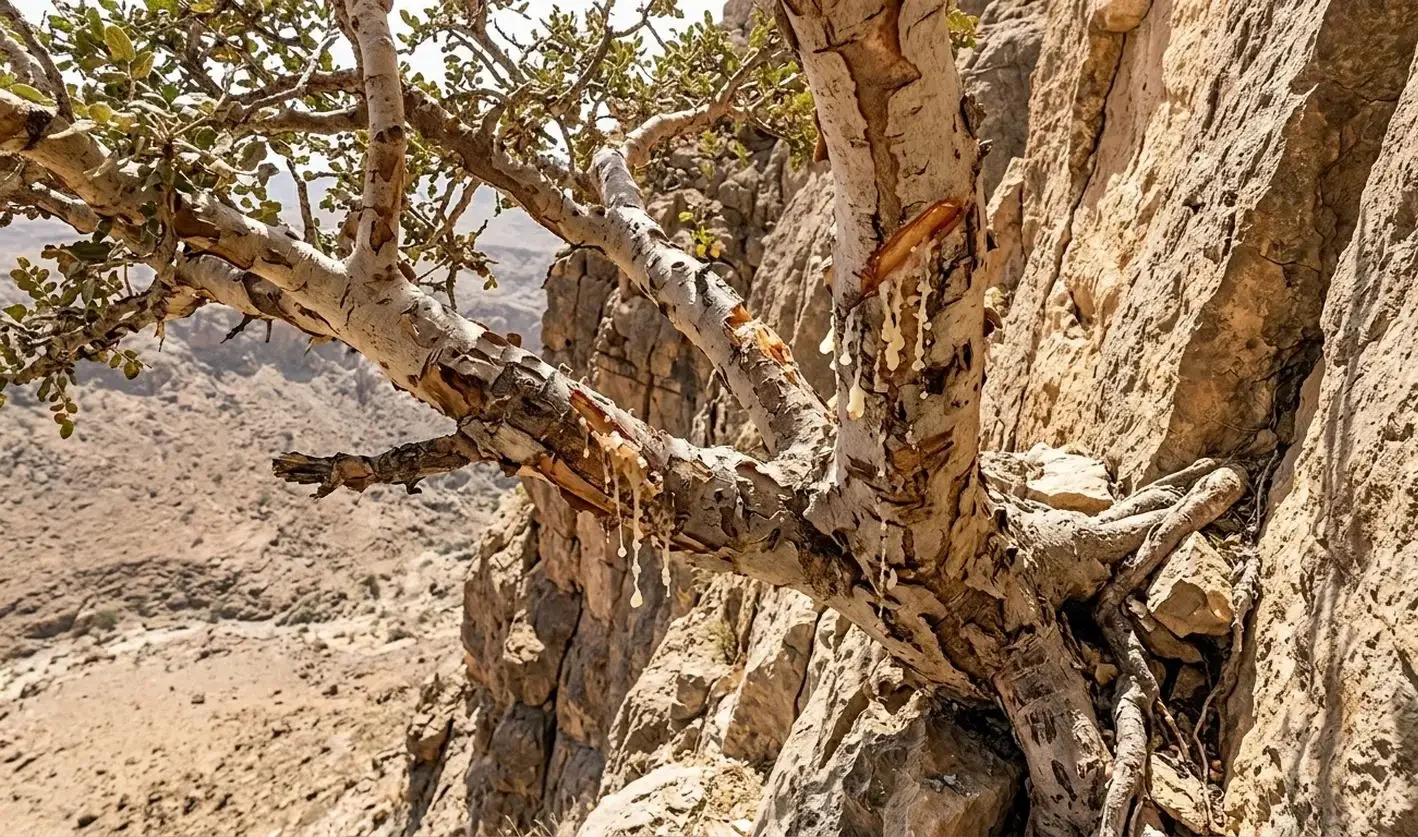
Frankincense is a resin — a hardened, aromatic sap — harvested from trees of the Boswellia genus. These are small, hardy trees that grow in some of the most inhospitable terrain on earth: the arid, rocky slopes of Oman, Yemen, Somalia, Ethiopia, and parts of India. They have adapted to survive in conditions that would kill most other trees, rooting into bare limestone cliff faces and surviving on morning mist in regions with almost no rainfall.
To harvest the resin, collectors make a series of deliberate cuts into the bark of the tree. A milky white liquid weeps from the wounds and hardens on contact with the air into the amber-coloured tears that have been traded across the ancient world for thousands of years. The resin is then steam-distilled to produce the essential oil, or used directly in its hardened form for burning as incense.
There are several species of Boswellia, each producing a slightly different resin with a different chemical profile. Boswellia sacra from Oman and Yemen is considered to produce the finest frankincense — this is the biblical variety, the one that travelled the ancient Incense Route from Arabia to Rome and Egypt. Boswellia serrata from India is the variety most studied in modern medical research, particularly for its anti-inflammatory compounds. Boswellia carterii from Somalia and East Africa is another significant commercial source.
Frankincense in Scripture
Few botanical ingredients have as extensive a scriptural record as frankincense. It appears repeatedly across the Old and New Testaments, always in contexts that signal its exceptional value.
The most specific reference is Exodus 30, where God gives Moses the formula for the sacred incense to be burnt in the Tabernacle. The recipe names four ingredients: stacte, onycha, galbanum, and frankincense. This is the ketoret — the holy incense that was to be burnt on the golden altar twice daily, morning and evening. The passage is explicit that this formula was not to be reproduced for any other purpose. The ingredients were not chosen arbitrarily. They were considered the finest aromatics the known world had to offer, and frankincense was among them.
Frankincense also appears in Leviticus as part of the grain offerings presented at the Tabernacle, and again in the Song of Solomon, where it is named among the most prized fragrances of the ancient Near East alongside myrrh and spikenard.
The New Testament reference is perhaps the most widely known. In Matthew 2, the Magi bring three gifts to the infant Jesus: gold, frankincense, and myrrh. The choice of frankincense has been interpreted by theologians across centuries as an acknowledgement of Christ’s priestly and divine nature — frankincense being the incense of priests and sacred ritual. It was not a casual gift. Gram for gram, it was worth as much as gold, and it carried the weight of an entire tradition of sacred use behind it.
What is striking about the scriptural record is not just the frequency of frankincense’s appearance, but the consistency of its context. It is always associated with the sacred, the pure, and the set apart. That is a significant thing to carry through three thousand years of history.

The Ancient Trade
Before it was a wellness ingredient, frankincense was an economic force. The Incense Route — a network of overland and maritime trade routes connecting the Arabian Peninsula to the Mediterranean — was built substantially around the trade in frankincense and myrrh. At its peak, the route carried thousands of tonnes of resin per year from the production regions of Oman, Yemen, and Somalia to the markets of ancient Rome, Greece, Egypt, and the Levant.
The city of Petra, now in Jordan, owed much of its extraordinary wealth to its position as a waypoint on this route. So did the Nabataean kingdom that built it. Roman demand for frankincense was insatiable — it was burnt in temples, used in burial rites, and consumed in quantities that ancient writers considered extravagant even by Roman standards. Pliny the Elder, writing in the first century AD, documented both the source regions and the trade with a detail that suggests frankincense was as commercially significant to the ancient world as oil is to the modern one.
That level of economic importance does not develop around something that does not work. The ancient world was not sentimental about its trade commodities.
What Frankincense Actually Smells Like
The scent of frankincense is warm, resinous, and complex. At its core it is balsamic — a deep, slightly sweet woodiness — with a clean, slightly citrus quality that lifts the heaviness and keeps it from feeling oppressive. There is a faint spiciness underneath, and in high-quality Boswellia sacra resin, a transparency and freshness that distinguishes it from cheaper varieties.
In perfumery, frankincense is used primarily as a base and heart note. It has exceptional fixative properties — it anchors lighter notes and slows their evaporation, giving a fragrance its lasting power. It blends naturally with myrrh, spikenard, cedarwood, sandalwood, and rose, which is partly why so many ancient sacred fragrance formulas drew on the same core set of ingredients. They were chosen not only for their individual properties but for how they worked together.
For aromatherapy, the scent is considered deeply grounding. It has a quality that quiets mental noise without inducing drowsiness — clarifying rather than sedating. This is consistent with its long traditional association with meditation, prayer, and contemplative practice across multiple independent faith traditions.

Traditional Uses and Benefits
The traditional uses of frankincense span Ayurvedic medicine, traditional Chinese medicine, ancient Egyptian practice, and the Western herbal tradition. The following reflects that historical record alongside what current research has been able to confirm or explore. Where human clinical evidence is limited, that is noted.
Anti-inflammatory Properties
The most researched aspect of frankincense in modern science is its anti-inflammatory activity. The key compounds responsible are boswellic acids — a group of triterpene acids found in the resin that have been shown to inhibit specific enzymes involved in the inflammation pathway. One of these, 5-lipoxygenase, plays a significant role in inflammatory conditions including arthritis, inflammatory bowel disease, and asthma.
This is not preliminary research. There is a substantial body of peer-reviewed work on boswellic acids, and several clinical trials have found meaningful results in conditions including osteoarthritis of the knee, Crohn’s disease, and ulcerative colitis. A 2003 study published in Phytomedicine found that a Boswellia serrata extract significantly reduced pain and improved function in patients with osteoarthritis of the knee compared to placebo. The traditional use of frankincense for joint pain and inflammatory conditions is one of the more clinically supported claims in the natural medicine space.
Skin Health
Frankincense has a long traditional reputation in skincare, particularly for mature or damaged skin. Its reported anti-inflammatory and astringent properties make it useful for calming irritated skin, reducing the appearance of blemishes, and supporting the skin’s natural repair processes. It has traditionally been applied to wounds, scars, and stretch marks, and is a common ingredient in natural skincare formulations aimed at improving skin tone and texture.
Applied topically as part of a blend — diluted in a carrier oil — it absorbs well and does not feel heavy on the skin. It is one of the reasons it appears in healing oil formulations: its anti-inflammatory action is relevant both to joint and muscle pain and to the condition of the skin itself.
Respiratory Support
Frankincense has been used across traditional medicine systems for bronchial congestion, asthma, and respiratory inflammation. The anti-inflammatory mechanism relevant to joints — inhibition of 5-lipoxygenase — is also relevant to the airways, where the same inflammatory pathway plays a role in asthmatic responses. A small number of clinical studies have explored Boswellia extracts for asthma with positive results, though the evidence base is still developing and further research is needed.
Nervous System and Mental Clarity
Frankincense has been used for centuries to support mental clarity, focus, and calm. Ayurvedic medicine classified it as a brain tonic. The aromatherapy tradition uses it specifically for grounding and quieting an overactive mind. Research into incensole acetate — a compound found in frankincense resin — has shown activity on ion channels in the brain associated with emotional regulation and warmth, which may help explain the reported calming effect. This remains an area of active research rather than settled clinical fact, but the consistency of the traditional use across independent cultures gives it weight.
Cancer Research — A Note
Frankincense has attracted significant research interest in oncology, primarily because boswellic acids have shown the ability to selectively induce apoptosis — programmed cell death — in certain cancer cell lines in laboratory settings, without affecting healthy cells in the same way. Studies have looked at its potential relevance to brain tumours, breast cancer, liver cancer, and colon cancer, among others.
It is important to be clear about what this means and what it does not mean. Laboratory results on cancer cells do not automatically translate into effective cancer treatments in human beings. The research is genuinely interesting and ongoing, and frankincense compounds are being studied seriously in this context. But it would be misleading to describe frankincense as a cancer treatment. What can honestly be said is that the compounds in this resin are being investigated by serious researchers for reasons that go beyond traditional use — and that is a meaningful thing to note about an ingredient that has been in human hands for five thousand years.
Frankincense and Hair Health
Less widely known is frankincense’s traditional application to scalp and hair health. In Ayurvedic practice it has been used to address scalp inflammation and dandruff, and its reported antibacterial and anti-inflammatory properties are consistent with this use. It appears in traditional hair preparations from several cultures, typically applied in diluted form to the scalp as part of an oil treatment.
For those dealing with an inflamed or irritated scalp, frankincense’s anti-inflammatory properties make it a logical inclusion in a natural hair care approach — though it is worth noting that the clinical research on this specific application is limited compared to its other uses.
How to Use Frankincense
Aromatherapy: Add three to five drops of frankincense essential oil to a diffuser. Its grounding, clarifying quality makes it particularly suited to morning use, meditation, or winding down in the evening. It blends well with myrrh, cedarwood, spikenard, sandalwood, and citrus oils.
Topical application: Always dilute frankincense essential oil in a carrier oil before applying to skin — typically one to three drops per teaspoon of carrier oil such as jojoba, hemp, or olive oil. Apply to areas of muscle or joint discomfort, to the temples for headaches, or to the skin as part of a facial or body oil routine. Perform a patch test on the inner forearm before wider use and wait 24 to 48 hours before applying broadly.
Burning the resin: Raw frankincense tears can be burnt on a charcoal disc to produce the traditional incense. This is the form in which frankincense has most often been used in ceremonial and sacred contexts, and the aroma produced from burning the raw resin is noticeably different — richer and more complex — than the steam-distilled essential oil.
In blended products: Frankincense is a common ingredient in natural healing oil blends, where it contributes its anti-inflammatory and fixative properties alongside other botanicals. In this context, the dilution and carrier oil are already handled by the formulation.
Important: Frankincense essential oil can cause skin sensitivity in some individuals. Always perform a patch test before widespread topical use. If you are pregnant, breastfeeding, or have an underlying health condition, consult your healthcare practitioner before use. Products containing frankincense are complementary health products and have not been evaluated by SAHPRA for quality, safety, or intended use.
A Note on Conservation
Frankincense trees are under serious pressure. The global demand for frankincense essential oil has grown significantly in recent decades, driven partly by the natural wellness market, and the Boswellia trees that produce it are being tapped at rates that exceed their ability to recover. Research published in Nature Sustainability has found that frankincense production could decline by 50% over the next fifteen years if current harvesting practices continue. In Ethiopia, Eritrea, and Somalia — where significant wild populations grow — deforestation and over-tapping are already causing measurable decline.
The trees are slow to mature and slow to recover from tapping. When tapped too frequently or too deeply, they produce less resin and become more susceptible to attack by the longhorn beetle, which has been devastating frankincense populations in parts of Ethiopia. Young trees are not regenerating at the rate needed to replace declining adults.
This is not a distant concern. It is worth asking any supplier of frankincense essential oil where their resin is sourced and whether it comes from sustainably managed sources. As with spikenard, where something comes from is part of what it is.
Frankincense in Kings-Oil Wonder Oil
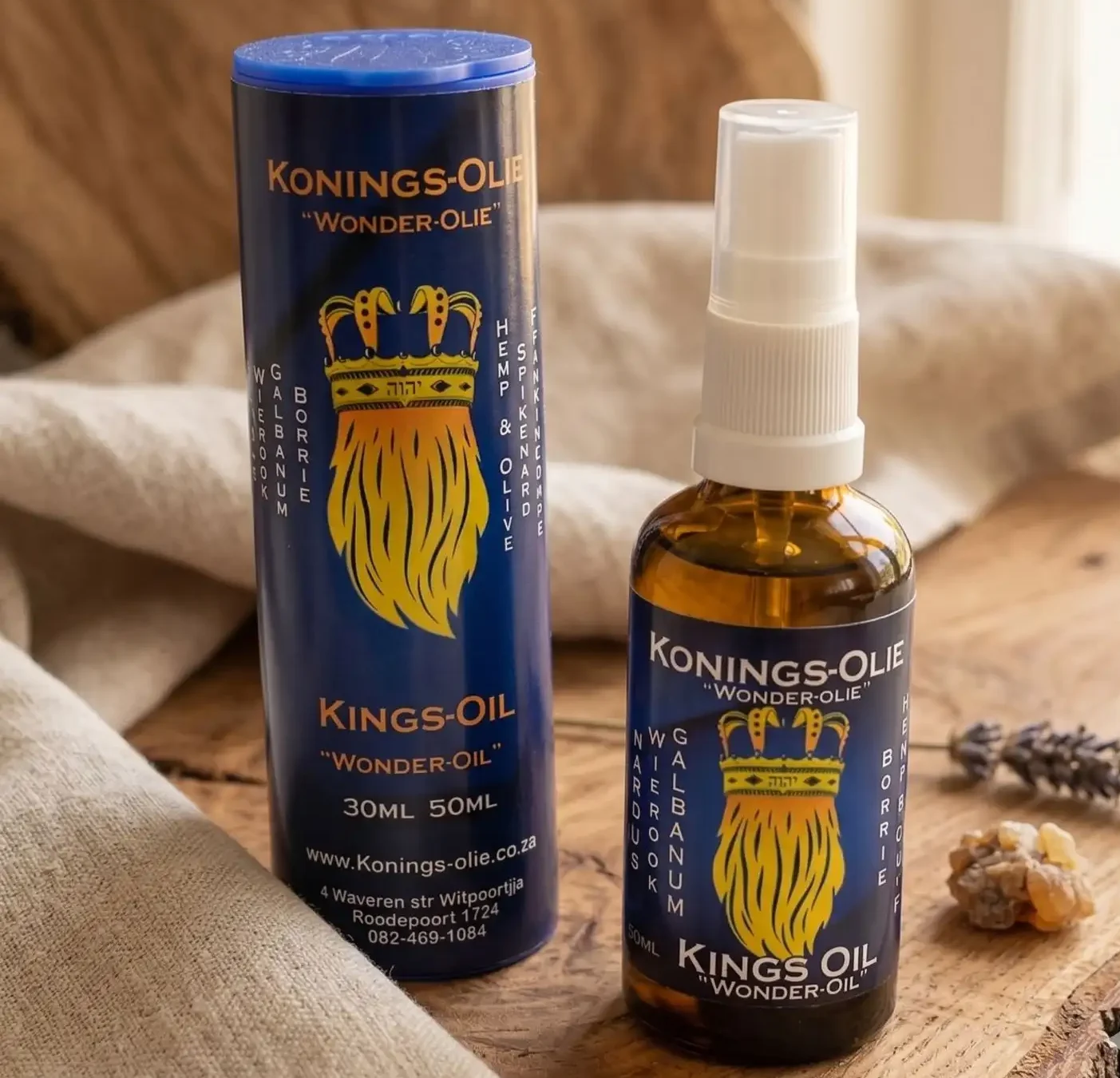
Frankincense is one of the four botanical oils in Kings-Oil Wonder Oil, alongside spikenard, galbanum, and turmeric. Within the blend, it contributes its traditional anti-inflammatory and tissue-repair properties — the same properties that placed it in the Exodus incense formula and in the hands of the Magi. The combination of these four oils draws directly on the tradition of sacred anointing oils with roots in biblical scripture, used together rather than in isolation.
Understanding what frankincense is and where it comes from makes the Wonder Oil ingredient list more legible — not a collection of exotic-sounding names, but a set of plants with thousands of years of documented use that happen to have found their way into one small bottle.
Five Thousand Years and Still Here
There are very few ingredients with a record like frankincense. It appears in ancient Egyptian burial sites, in the sacred texts of three major world religions, in the trade ledgers of ancient Rome, in Ayurvedic medical texts that predate the Christian era, and in peer-reviewed oncology journals published this decade. That is a remarkable span for a tree resin from a rocky hillside in Oman.
Most ingredients do not survive that kind of scrutiny. They fall out of use as knowledge systems change or as the evidence fails to support the tradition. Frankincense has survived every transition — from ancient ritual to medieval apothecary to modern laboratory — not because it was protected by sentiment, but because people across entirely separate traditions kept finding it useful.
That kind of convergence, across five thousand years and every major civilisation that encountered it, is not something that happens by accident.